All published articles of this journal are available on ScienceDirect.

Effectiveness of Oral Hygiene Aids for Children with Special Healthcare Needs: A Systematic Review and Meta-Analysis
 iD
Authors Info & Affiliations
Abstract
Introduction
Children with special healthcare needs (CSHCN) often experience substantial barriers to maintaining oral hygiene because of physical, sensory, cognitive, or behavioral limitations. Various oral hygiene aids have been developed to improve plaque control and facilitate daily oral care in this population. This systematic review and meta-analysis aimed to evaluate the clinical effectiveness and practical applicability of oral hygiene aids for children with special healthcare needs.
Materials and Methods
A systematic search of five databases (PubMed, Cochrane, Embase, Scopus, and Google Scholar) from 2006 to 2026 was conducted. Randomized controlled trials and clinical studies assessing oral hygiene aids in CSHCN were included. Risk of bias was assessed using RoB 2, MINORS, and the Newcastle–Ottawa Scale. Meta-analysis using a random-effects model calculated standardized mean differences (SMDs) for plaque indices. Certainty of evidence was assessed using GRADE.
Results
Fifteen studies were included in the systematic review, with 8 RCTs analyzed in the meta-analysis. The quantitative synthesis indicated a significant reduction in plaque accumulation following targeted interventions (pooled SMD = −1.87; 95% CI: −2.40 to −1.35). Subgroup analyses suggested that triple-headed toothbrushes appeared to provide a substantial effect (SMD = −3.86, I2 = 0%), whereas children with Down syndrome experienced marked improvements (SMD = −4.03) using 3D-printed handles. Qualitatively, evidence suggests that oral hygiene devices may help accommodate motor deficits and support behavioral compliance.
Discussion
The effectiveness of oral hygiene aids appears to depend on the alignment between device design and the child’s functional limitations. Structurally modified toothbrushes and customized handles may provide additional benefits for children with motor or intellectual disabilities, whereas powered toothbrushes may be particularly advantageous for sensory-impaired populations.
Conclusion
Adapted oral hygiene aids may improve plaque control in selected groups of children with special healthcare needs. However, considerable heterogeneity, limited data for individual devices, and low certainty of evidence restrict direct comparisons and generalizability. Individualized device selection and caregiver support warrant evaluation in larger, longer-term trials.
1. INTRODUCTION
Children with special healthcare needs (CSHCN) represent a highly diverse population, encompassing those with chronic physical, developmental, behavioural, or emotional conditions who require health and related services beyond those needed by children in general [1]. According to the World Health Organization (WHO), approximately 93 million children aged 0–14 years live with moderate-to-severe disabilities globally, while a further 13 million experience functional limitations [2, 3]. Recent data indicate that Southeast Asia has a substantial population of children with special healthcare needs, with disability prevalence estimated at 4% and 15% across the region [4]. This highlights the urgent need for integrated public health strategies, particularly in specialized dental care and oral hygiene management, to address the unique challenges faced by this vulnerable population [4].
A wide range of dental conditions - including dental caries, periodontal diseases, traumatic dental injuries (TDIs), and dental erosion - significantly impact the oral health-related quality of life (OHRQoL) of children and adolescents [5, 6]. High caries prevalence has also been reported among CSHCN, with mean dmft/DMFT indices notably higher than those of typically developing peers [7]. Many CSHCN are often cared for at home and rely on caregivers for daily oral hygiene, which may increase caregiver burden [8]. However, the literature indicates that up to 62.5% of parents and caregivers experience substantial difficulty brushing their children's teeth [9]. Implementing adaptive oral hygiene tools to promote self-care autonomy is a crucial strategy to simultaneously improve dental outcomes while alleviating psychosocial stress among families [10].
Special healthcare needs may include mental, emotional, behavioral, developmental, or sensory conditions, but these categories should not be treated as interchangeable. Anxiety, sensory aversion, difficulties with transitions, and challenges with tolerating oral contact can affect daily toothbrushing for some children; support should be adapted to the individual rather than assumed from a diagnostic label [2, 11-13]. Caregivers and, where applicable, trained nurses or other care staff may assist with positioning, selecting an appropriate aid, demonstrating brushing, and establishing a tolerable routine. Caregiver burden and access to individualized preventive support should therefore be considered alongside plaque indices [9, 10, 13-15].
Recent clinical trials have reported benefits of electric or powered toothbrushes compared with manual brushing in some groups of children with sensory impairments [16], and they are also well tolerated and effective for children with Down syndrome [17]. Beyond powered devices, physical modifications, such as customized toothbrush handles tailored with materials like acrylic or clay to accommodate limited manual dexterity in patients with cerebral palsy, have shown promise in improving oral hygiene and promoting independent brushing [18]. Furthermore, innovative designs such as three-sided (triple-headed) toothbrushes are highly effective in cleaning multiple tooth surfaces simultaneously, thereby reducing brushing time and improving plaque removal for children with autism spectrum disorder or intellectual disabilities who have low tolerance for oral care [19].
Studies indicate that children with special health care needs face notable challenges in maintaining oral hygiene due to various physical, sensory, or cognitive conditions [11, 20]. To address these difficulties, primary research has investigated different adaptive tools, ranging from electric toothbrushes to custom handles, which aim to support the functional abilities of these patients [21]. However, the current literature evidence remains scattered. While individual trials examine specific devices, there is limited quantitative synthesis comparing the effectiveness of these tools across different types of disabilities. In addition, few reviews have systematically compared the benefits of structural design modifications with automated motor functions. This gap in the literature can complicate evidence-based clinical decision-making. Without a thorough understanding of how specific tools align with particular disabilities, dental practitioners may need to rely on generalized advice rather than providing tailored interventions. This systematic review and meta-analysis aims to evaluate the effectiveness of various oral hygiene aids and to bridge the gap between patient functional limitations and adaptive tool design. It further seeks to provide evidence-based recommendations that guide dental practitioners in prescribing personalized preventive solutions, assist manufacturers in refining specialized dental products, and support policymakers in advancing inclusive healthcare initiatives [22].
2. MATERIALS AND METHODS
2.1. Protocol and Registration
This systematic review was conducted in accordance with the PRISMA 2020 checklist (Preferred Reporting Items for Systematic Reviews and Meta- Analyses) [23] and the Cochrane Handbook for Systematic Review of Interventions [24]. The review protocol was registered in the International Prospective Register of Systematic Reviews (PROSPERO) database (Registration number CRD420251128432).
2.2. Research Question and Eligibility Criteria
Research question: What oral hygiene tools are currently available, and how effective are they for children with special healthcare needs?
The eligibility criteria were defined a priori using the Population–Intervention–Comparator–Outcome–Study design (PICOS) framework.
P (Population): Children (≤18 years) diagnosed with special healthcare needs, including but not limited to:
- Autism spectrum disorder (ASD)
- Cerebral palsy (CP)
- Down syndrome
- Visual impairment
- Hearing impairment
I (Interventions): Mechanical and/or structural oral hygiene aids, including:
- Manual toothbrushes (standard or modified)
- Powered toothbrushes
- Triple-headed toothbrushes
- Customized toothbrush handles (e.g., 3D-printed or adapted grips)
- Adjunctive mechanical devices (e.g., floss holders, interdental brushes, oral irrigators)
Note: Behavioral interventions (e.g., parent training) were included in the qualitative synthesis but excluded from quantitative meta-analysis to maintain conceptual homogeneity.
C (Comparator/Control): Conventional manual toothbrushing, alternative aids, or no intervention.
O (Outcomes):
- Primary outcome: Plaque accumulation measured using validated indices (e.g., Turesky Modification of the Quigley–Hein Plaque Index [TQHPI])
- Secondary outcomes: Ease of use, caregiver burden, acceptability, and cost-effectiveness
2.3. Study Designs
- Randomized controlled trials (RCTs)
- Non-randomized clinical studies (e.g., cohort, quasi-experimental)
- Cross-sectional studies (included for qualitative synthesis only)
Randomized Controlled Trials (RCTs) were used for meta-analysis, while other non-randomized studies, such as prospective/retrospective cohort studies, cross-sectional studies, and in vitro studies, were synthesized narratively.
2.4. Exclusion Criteria
Articles without full-text and duplicate records were excluded. The risk of bias was assessed for all included studies, and the results were incorporated into data synthesis and interpretation rather than used as criteria for exclusion during the screening stage.
2.5. Search Strategy
A comprehensive literature search was conducted across the following electronic databases:
- PubMed/MEDLINE
- Cochrane Central Register of Controlled Trials (CENTRAL)
- Embase
- Scopus
- Google Scholar
The search covered studies published from 1 January 2006 to 31 January 2026, with no restrictions on geographical location. Only studies published in English or Vietnamese were included.
The search strategy combined controlled vocabulary and free-text terms related to:
- Keywords: Special needs; children with disabilities; autism; cerebral palsy; Down syndrome; visual impairment; hearing impairment; oral hygiene aids, oral hygiene tools; manual toothbrush; electric toothbrush; water flosser; dental floss; effectiveness; efficiency; plaque control; caries prevention.
- Boolean Operators: AND, OR were used to refine the search.
Additionally, the reference lists of included studies and relevant reviews were manually screened to identify further eligible studies. Database-specific executed search strings, platform details, and retrieved record counts are reported in Supplementary Table 1.
2.6. Study Selection and Data Extraction
All retrieved records were imported into Zotero version 8.0.4 for reference management and duplicate removal.
Study selection was conducted in two stages:
- Title and abstract screening
- Full-text assessment
Two reviewers independently screened all records against the eligibility criteria. Disagreements were resolved through discussion, and, when necessary, consultation with a third reviewer. Inter-reviewer agreement was assessed using Cohen’s kappa coefficient.
Data were independently extracted by two reviewers using a standardized data extraction form in Microsoft Excel. The following information was collected:
- Study characteristics (author, year, country, design)
- Participant characteristics (sample size, age, type of disability)
- Intervention details (type of oral hygiene aid, duration, frequency)
- Comparator characteristics
- Outcome measures and time points
- Numerical data for meta-analysis (means, standard deviations, sample sizes)
When required data were missing or unclear, attempts were made to contact the study authors.
2.7. Risk of Bias Assessment
The methodological quality of included studies was independently assessed by two reviewers using validated tools appropriate to study design:
RCTs: Cochrane Risk of Bias 2 (RoB 2) tool [25].
Non-randomized studies: Methodological Index for Non-Randomized Studies (MINORS) [26, 27].
Cross-sectional studies: Newcastle–Ottawa Scale (NOS), adapted for cross-sectional design [28].
Disagreements were resolved by consensus or consultation with a third reviewer. Risk-of-bias results were presented in the corresponding tables, and the certainty of the evidence was assessed using GRADEpro; when meta-analysis was not possible, the evidence was synthesized narratively [29].
2.8. Data Analysis
Analyses were conducted using Stata version 16.0 (StataCorp, College Station, TX, USA). Only studies with comparable interventions and reporting the same outcome measures were quantitatively synthesized.
For continuous outcomes, the modified Quigley–Hein Index (TQHPI), pooled effect sizes were calculated using Standardized Mean Differences (SMDs) with corresponding 95% Confidence Intervals (CIs), due to variations in measurement scales and reporting methods across studies. When studies reported pre–post data (e.g., T0 vs. T1 or T2), effect sizes were calculated based on mean changes where available; otherwise, post-intervention values were used.
Statistical heterogeneity was assessed using Cochran’s Q (χ2) test and quantified with the I2 statistic. Heterogeneity was interpreted as follows: low (0-25%), moderate (26-50%), substantial (51-75%), and considerable (>75%). A p-value < 0.10 for the χ2 test was considered indicative of statistically significant heterogeneity.
Given the anticipated clinical and methodological heterogeneity among included studies (e.g., differences in participant characteristics such as disability type, intervention modalities, and follow-up duration), a random-effects model (DerSimonian and Laird method) was applied as the primary analytical approach.
- To explore potential sources of heterogeneity, subgroup analyses were performed by type of intervention (e.g., manual toothbrush, powered toothbrush, three-headed toothbrush, toothbrushing combined with dental floss or a water flosser).
- Participant characteristics (e.g., hearing impairment, visual impairment, Down syndrome, special healthcare needs).
- Follow-up time points (e.g., T1, T2).
Differences between subgroups were evaluated using a test for subgroup differences, with p < 0.05 considered statistically significant.
When a subgroup included fewer than two studies, heterogeneity was not estimated, and results were interpreted descriptively.
Publication bias was assessed by visual inspection of funnel plots and further evaluated using Egger’s regression test when at least ten studies were available for a given outcome.
All statistical tests were two-tailed, and a p-value < 0.05 was considered statistically significant, unless otherwise specified.
2.9. Synthesis of Results
Results were synthesized narratively according to the main outcomes: plaque accumulation, ease of use, cost-effectiveness, and acceptability of oral hygiene tools. Where appropriate, meta-analysis was conducted for comparable continuous outcomes, with pooled estimates presented as MD or SMD with 95% CIs. Statistical significance was set at p < 0.05. Sensitivity analyses were conducted to assess the robustness of the pooled estimates. These included:
- Leave-one-out analysis, in which each study was sequentially excluded.
- Exclusion of influential studies defined as those that changed the pooled effect size by more than 10-15%.
- Re-analysis using the remaining dataset with updated forest plots.
3. RESULTS
3.1. Study Selection
The study selection process is illustrated in Fig. (1). A total of 1,040 records were identified through database searching. No records were identified from registers. After removal of 364 duplicate records, 676 records remained for title and abstract screening. Of these, 646 records were excluded for failing to meet the eligibility criteria. Subsequently, 30 full-text reports were sought for retrieval, and all were successfully retrieved. Following full-text assessment, 15 reports were excluded for the following reasons: not related to oral hygiene aids or devices (n = 4), disability not specifically defined (n = 1), wrong intervention (n = 9), and ineligible age group (n = 1). After screening, no in vitro studies met the inclusion criteria. Finally, 15 studies were included in the systematic review.
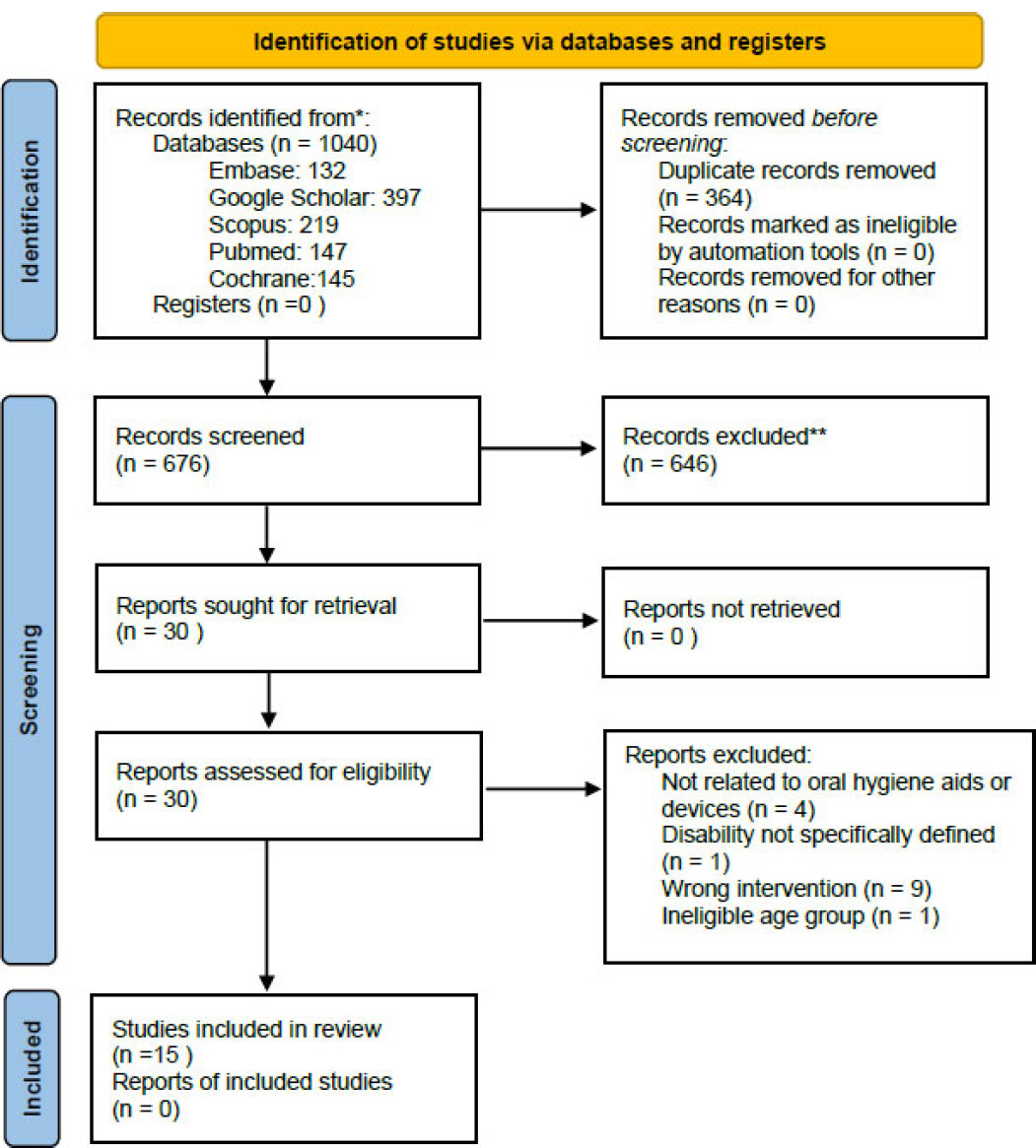
PRISMA flowchart for identification of included studies.
3.2. Characteristics of Included Studies
The included studies were published between 2012 and 2026 and were conducted across diverse geographical regions, including Asia, the Middle East, North America, and South America.
Among the 15 included studies:
- 13 were randomized controlled trials
- 1 non-randomized clinical study
- 1 cross-sectional study
Sample sizes ranged from 16 to 119 participants, with participants aged 3 to 18 years. The study populations included children with:
- Visual Impairment
- Hearing Impairment
- Cerebral Palsy (CP)
- Down Syndrome
- Autism Spectrum Disorder (ASD)
Interventions varied widely and included:
- Powered toothbrushes
- Modified manual toothbrushes (e.g., customized or enlarged handles)
- Triple-Headed Toothbrushes (THT)
- Adjunctive devices (e.g., oral irrigators, flossing aids)
Behavioral interventions (e.g., parent training) were identified in the qualitative synthesis but were excluded from the meta-analysis to maintain intervention homogeneity.
A detailed summary of study characteristics is provided in Table 1.
| Study | Country | Design | Sample / Age | Condition | Duration | Intervention | Comparator | Outcome and Main Finding |
|---|---|---|---|---|---|---|---|---|
| Sharma et al., 2012 [30] | India | Cross-sectional | n=40; 6–14 y | Visual impairment | 1 week | Electric toothbrush | Manual toothbrush | Plaque: electric toothbrush showed greater plaque removal. |
| Ferraz et al., 2015 [31] | Brazil | RCT | n=40; 4–16 y | CP | NR | Electric toothbrush, switched on | Manual/electric toothbrush switched off | Plaque/oral hygiene: powered-on and manual brushing showed comparable effects; both performed better than powered-off brushing. |
| Cui et al., 2017 [16] | China | RCT | n=33; 12–16 y | Visual impairment | 30 days | Powered toothbrush with holder | Manual toothbrush | Plaque and gingival health: powered toothbrush showed greater improvement. |
| Rai et al., 2018 [18] | India | RCT | n=30; 6–18 y | CP | 3 weeks | Customized toothbrush | Conventional toothbrush | Oral hygiene and gingival health: customized toothbrush improved oral hygiene and gingival outcomes. |
| Krishnan et al., 2019 [32] | India | Non-RCT | n=30; 12–17 y | CP | 12 weeks | Modified toothbrush handle | Conventional manual brushing | Plaque: modified handle produced comparable plaque removal. |
| Silva et al., 2020 [17] | Brazil | RCT | n=29; 6–14 y | Down syndrome | 3 weeks | Conventional toothbrush | Electric rotational-oscillatory toothbrush | Biofilm: both toothbrushes showed comparable biofilm removal. |
| Patel et al., 2021 [33] | India | RCT | n=60; 10–14 y | Hearing + visual impairment | 15 days | Powered toothbrush | Manual toothbrush | Plaque: greater plaque reduction with powered brushing. |
| Droubi et al., 2021 [34] | Syria | RCT | n=48; 6–9 y | Down syndrome | 3 weeks | Customized 3D-printed handle | Conventional toothbrush | Oral health: customized handle was associated with improved oral health outcomes. |
| Fenning et al., 2022 [14] | USA | RCT | n=119; 3–13 y | ASD | 6 months | Parent training | Educational toolkit | Oral hygiene/health: parent training showed promising effects. |
| Deepika et al., 2022 [35] | India | RCT | n=90; 6–18 y | Visual impairment | 28 days | Brushing + oral irrigator | Brushing + flossing/brushing alone | Plaque: oral irrigator provided greater plaque control. |
| Jaya et al., 2022 [36] | India | RCT | n=45; 7–12 y | Visual impairment | 2 months | Electric/nano-b toothbrush | Manual toothbrush | Plaque: nano-b showed the greatest plaque removal, followed by electric and manual brushing. |
| Fageeh et al., 2022 [37] | Saudi Arabia | RCT | n=16; 6–15 y | Down syndrome | 8 weeks | Curved special-needs toothbrush | Superfine nano special-needs toothbrush | Plaque and gingival health: both interventions improved gingival health and reduced plaque. |
| Meghana et al., 2025 [38] | India | RCT | n=32; 8–12 y | Visual impairment | 14 days | Chewable toothbrush | Manual toothbrush | Oral hygiene: chewable toothbrush improved oral hygiene. |
| Roychowdhury et al., 2025 [39] | India | RCT | n=108; 7–18 y | Visual impairment | 3 months | Triple-headed toothbrush | Conventional toothbrush | Plaque and gingival health: triple-headed toothbrush showed greater improvement. |
| Tanaiadchawoot et al., 2026 [40] | Thailand | RCT | n=46; 6–12 y | ASD | NR | Triple-headed toothbrush | Single-headed toothbrush | Plaque and brushing time: triple-headed toothbrush provided greater plaque removal and shorter brushing time. |
3.3. Risk of Bias Assessments
The risk of bias for 13 RCT studies was assessed using the Cochrane RoB 2 tool, where 5 domains were evaluated and categorized as low risk, some concerns, or high risk. The majority of the included studies had a low-to-moderate risk of bias across the respective domains. Among the included studies, Ferraz et al., Fenning et al., and Deepika et al. reported the lowest risk of bias [14, 31, 35], whereas Cui et al. reported the highest risk of bias [16]. The remaining nine studies were categorized as having some concerns [17, 18, 33, 34, 36-40] (Fig. 2).
The single non-randomized study assessed using MINORS was rated as moderate quality, primarily due to the absence of a prospective sample size calculation and a lack of blinded outcome assessment (Table 2).
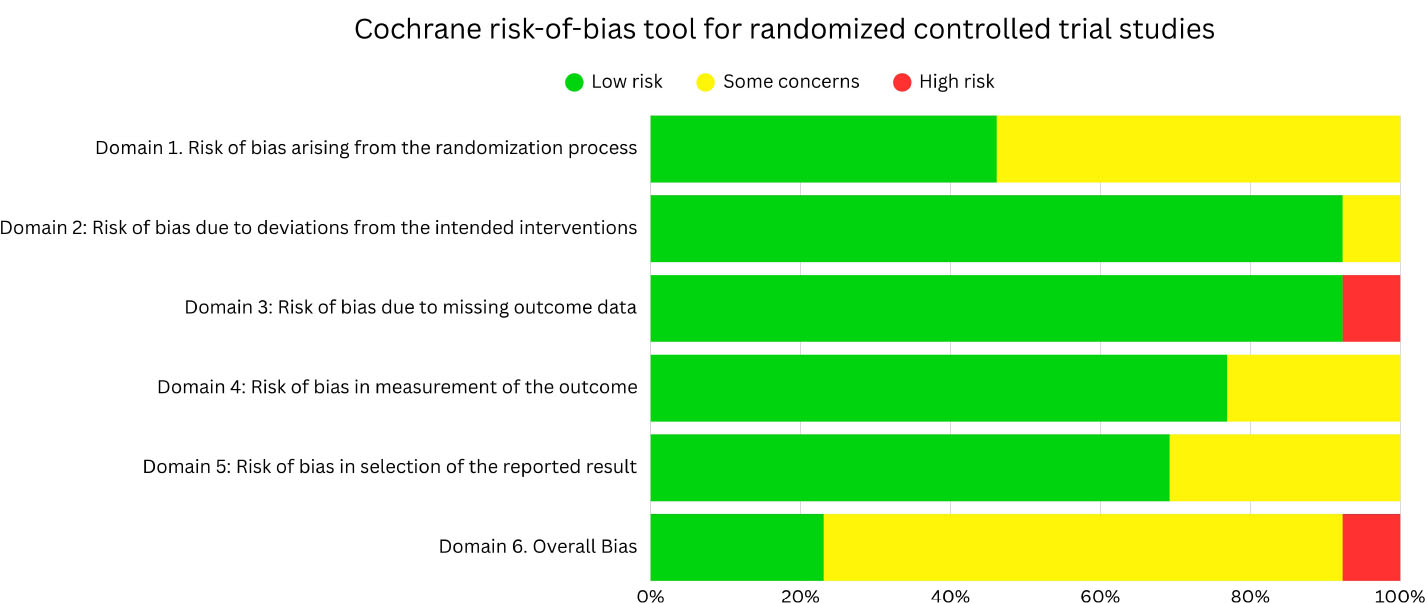
Cochrane risk-of-bias tool for randomized controlled trial studies.
| Methodological Index for Non-randomized Studies (MINORS) | |||||||||
|---|---|---|---|---|---|---|---|---|---|
|
A clearly stated aim (0-2) |
Inclusion of Consecutive Patients (0-2) |
Prospective collection of data (0-2) |
Endpoints Appropriate to the Aim of the Study (0-2) |
Unbiased Assessment of the Study Endpoint (0-2) |
Follow-up Period Appropriate to Aim of the Study (0-2) |
Loss to Follow-up Less than 5% (0-2) |
Prospective Calculation of the Study Size (0-2) |
Total (0-16) | |
| Krishnan et al. (2019) [32] | 2 | 2 | 2 | 2 | 0 | 2 | 2 | 0 | 12 (Moderate) |
The cross-sectional study assessed using the Newcastle–Ottawa Scale (NOS) achieved a score of 6/10, indicating satisfactory quality, but with limitations related to the representativeness of the sample and a lack of reporting on non-respondents (Table 3).
| Newcastle-Ottawa Scale (NOS) for Cross-sectional Studies | |||||||||
|---|---|---|---|---|---|---|---|---|---|
| Study | Selection | Comparability |
Total (0-10) |
Quality | |||||
|
Representativeness of the Sample (0-1) |
Sample Size (0-1) |
Non- respondents (0-1) |
Ascertainment of the Exposure (Risk Factor) (0-2) |
The Subjects in Different Outcome Groups are Comparable, Based on the Study Design or Analysis. Confounding Factors are Controlled. (0-2) |
Assessment of the Outcome (0-2) |
Statistical test (0-1) |
|||
| Sharma et al. (2012) [30] | * | ** | ** | * | 6 | Satisfactory study | |||
3.4. Effectiveness in Plaque Removal
The overarching objective of the synthesized clinical trials was to evaluate the comparative efficacy of specialized oral hygiene interventions compared with conventional methods in reducing plaque accumulation among children with special healthcare needs (CSHCN). Within the context of this review, the Turesky et al. Modification of the Quigley Hein (TQHPI) serves as a sensitive quantitative parameter for assessing mechanical biofilm disruption on specific tooth surfaces [41].
3.4.1. Baseline Challenges in Plaque Control
At baseline (T0), the synthesized data consistently demonstrated elevated TQHPI scores across the CSHCN cohorts, reflecting the profound mechanical and cognitive barriers to oral care. For instance, children with Down syndrome exhibited high initial TQHPI scores ranging from 3.63 to 4.41 [34], while children with intellectual disabilities and autism presented baseline scores of up to 3.45 [40]. These initial values underscore the inadequacy of conventional brushing routines before targeted interventions.
3.4.2. Comparisons between Powered and Manual Toothbrushes
The data indicated varying levels of efficacy when comparing powered toothbrushes to conventional manual ones across different participant groups. In cohorts of children with sensory impairments (such as visual or auditory impairments), studies (e.g., Cui et al., Patel et al.) consistently reported that powered toothbrushes achieved a significantly greater reduction in TQHPI scores compared to manual brushing [16, 33].
Conversely, in populations characterized by motor or intellectual disabilities, the difference in efficacy appeared to be less distinct. Trials involving children with Cerebral Palsy (Ferraz et al.) and Down syndrome (Silva et al.) found that powered and manual toothbrushes yielded comparable results, with no statistically significant difference in biofilm removal between the two modalities [17, 31].
3.4.3. Efficacy of Modified and Specialized Manual Interventions
Trials using customized or anatomically modified manual toothbrushes tailored to the children’s specific limitations seemed to show more consistent improvements in TQHPI scores.
Data from trials evaluating customized handle modifications (such as the 3D-printed handles investigated by Droubi et al.) [34] and brush head adaptations (such as the triple-headed toothbrushes evaluated by Tanaiadchawoot et al.) [40] showed significantly lower plaque accumulation. These modified tools consistently outperformed standard manual brushes in their respective target groups. Droubi demonstrated that customizing toothbrush handles using 3D-printed Polylactic Acid (PLA) to fit the child's grip resulted in significantly lower plaque accumulation in children with Down syndrome (TQHPI reduced to 0.26) compared to conventional brushes [34]. A crossover trial by Tanaiadchawoot’s study revealed that Triple-Headed Toothbrushes (THT) not only yielded significantly lower post-brushing TQHPI scores (1.26 vs 1.70) than single-headed toothbrushes but also required substantially less brushing time [40].
Similar positive outcomes were observed with alternative mechanical devices. For example, chewable toothbrushes (Meghana et al.) were associated with significant plaque reductions in visually impaired children, and the use of nanotechnology-enhanced bristles (Jaya et al.) also resulted in superior plaque-removal efficacy compared with both standard manual and electric toothbrushes.
In summary, the synthesized TQHPI data indicate that while all mechanical brushing reduces biofilm, the strategic integration of customized handles [34], multi-headed designs [40], or powered adjuncts [16, 33] is critical for optimizing plaque clearance in specific CSHCN subpopulations.
3.5. Additional Outcomes
Beyond plaque indices, the practical value of an oral hygiene aid may depend on ease of use, tolerability, caregiver assistance, and affordability. These additional outcomes were not measured or reported consistently across studies and were therefore summarized narratively.
3.5.1. Ease of Use and Caregiver Burden
Anatomical modifications significantly alleviated caregiver burden and compensated for patients' motor deficits. Customization of toothbrush handles—using 3D-printed PLA [34] or self-cure acrylic resin adapted to the child's grip [18] effectively accommodated the compromised manual dexterity inherent in Down syndrome and Cerebral Palsy. Similarly, Tanaiadchawoot et al. (2026) demonstrated that Triple-Headed Toothbrushes (THT) expedited the cleaning process, reducing the technical demand on caregivers by simultaneously engaging multiple tooth surfaces; the study recorded a significant reduction in brushing time for the THT group (2.3 ± 0.9 minutes) compared to the single-headed group (3.3 ± 0.9 minutes) [40].
3.5.2. Acceptability and Behavioral Compliance
Acceptability and behavioral compliance varied according to the specific disability profile. Powered toothbrushes were generally well-accepted by sensory-impaired cohorts, although some children initially resisted the vibrations [16, 33]. For children with Autism Spectrum Disorder (ASD), Parent Training (PT) programs were crucial; Fenning found that PT significantly improved twice-daily brushing frequency and reduced child distress behaviors during oral care compared to standard toolkits [14]. Furthermore, unconventional designs, such as chewable brushes, yielded exceptional compliance in visually impaired children by mitigating sensory overload and allowing for independent use [38].
3.5.3. Economic Viability and Cost-effectiveness
Finally, although formal cost-effectiveness analyses remain limited, the narrative evidence suggests a favorable economic trajectory. While specialized aids—such as the superfine Nano-b brush or powered devices—incur higher initial outlays, their superior biofilm disruption mitigates the long-term incidence of advanced caries [37]. Ultimately, this preventive efficacy offsets the prohibitive financial and systemic costs associated with complex dental rehabilitations, which often require general anesthesia for this vulnerable population [14, 18]. Low-cost modifications, such as using a plastic ball or acrylic to enlarge handles, provide a budget-friendly alternative that achieves comparable plaque reduction to more expensive specialized tools [32].
3.6. Meta-analysis of Plaque Removal
3.6.1. Overall Pooled Effect
Overall, the pooled effect suggested a statistically significant improvement in oral hygiene (SMD = -1.87; 95% CI: -2.40 to -1.35). However, substantial heterogeneity was observed (I2 = 91.5%), indicating considerable variability across studies. Therefore, the findings should be interpreted with caution. The significant subgroup differences (p < 0.001) suggest that intervention type may partly explain this heterogeneity, with THT showing the most consistent and pronounced effect.
3.6.2. Subgroup Analysis by Follow-up Time Points
To evaluate the temporal stability of the interventions, a subgroup analysis comparing immediate post-intervention (T1) and extended follow-up (T2) results was conducted. The pooled analysis showed a significant reduction in TQHPI at both time points. In the T1 subgroup, the pooled SMD was -2.20 (95% CI: -3.22 to -1.17; I2 = 92.4%). Similarly, the T2 subgroup demonstrated a robust reduction with a pooled SMD of -2.86 (95% CI: -4.03 to -1.70; I2 = 93.1%). Although the effect size nominally increased at T2, the difference between the T1 and T2 subgroups was not statistically significant (p = 0.401). This suggests that the mechanical and clinical efficacy of the specialized interventions is established early (T1) and successfully maintained over extended periods (T2) without significant depreciation (Fig. 3).
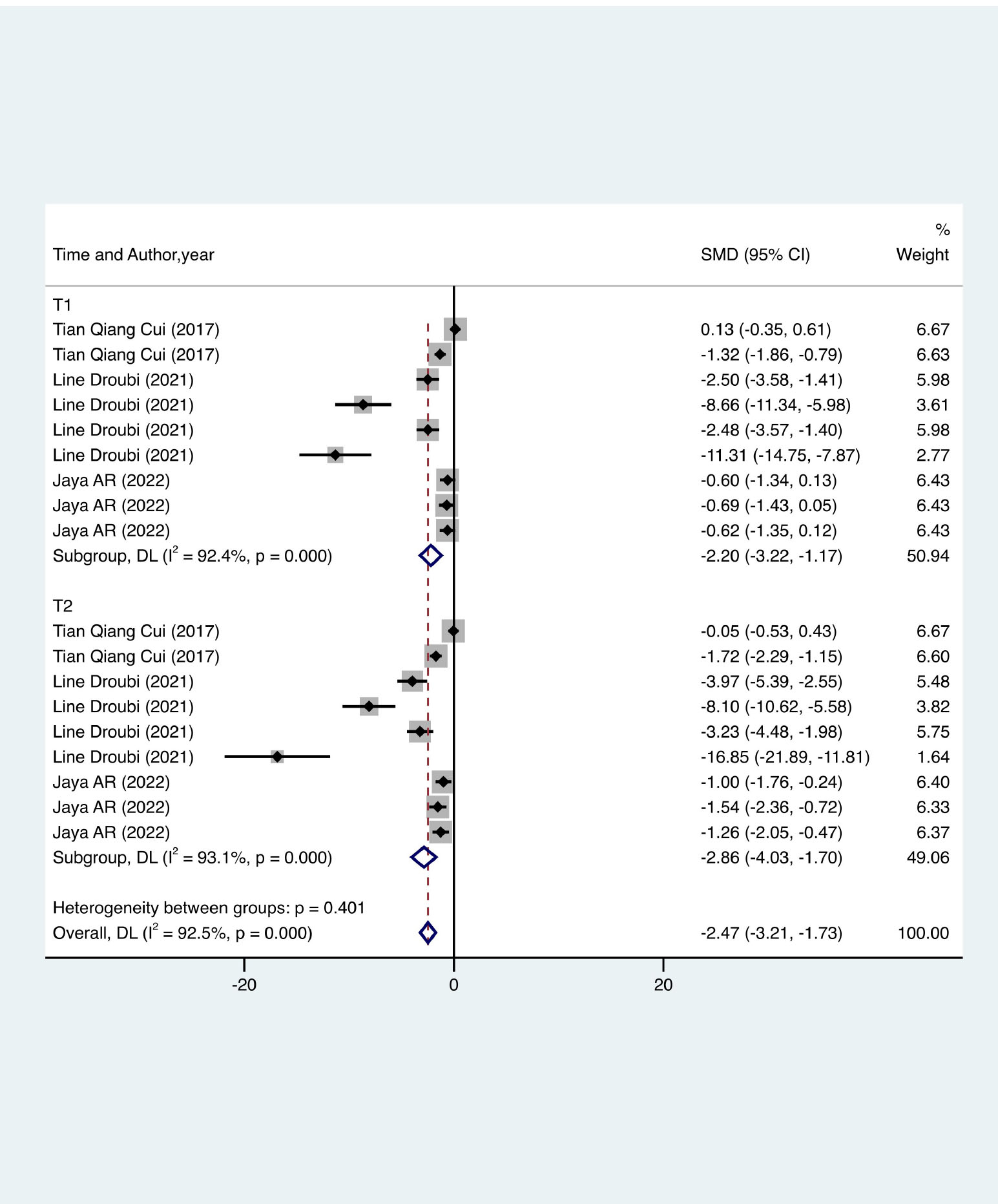
Subgroup analysis by follow-up time points.
3.6.3. Subgroup Analysis by Intervention Type
Subgroup analysis based on intervention modality, as presented in Fig. (4), revealed that all forms of targeted oral hygiene tools significantly reduced TQHPI. Notably, the Triple-Headed Toothbrush (THT) subgroup demons-trated the most profound clinical impact, yielding an exceptionally large effect size (SMD = -3.86; 95% CI: -4.56 to -3.17) with no observed heterogeneity (I2 = 0%). By comparison, interventions categorized as “Others” (comprising various powered and modified aids) showed a pooled SMD of -1.94 (95% CI: -2.55 to -1.23; I2 = 89.5%), while conventional manual toothbrushes yielded a pooled SMD of -1.54 (95% CI: -2.29 to -0.79; I2 = 91.3%). The test for subgroup differences confirmed that these variations in efficacy across intervention types were statistically significant (p < 0.001), suggesting the potential benefits of specialized designs such as the THT in improving plaque removal.
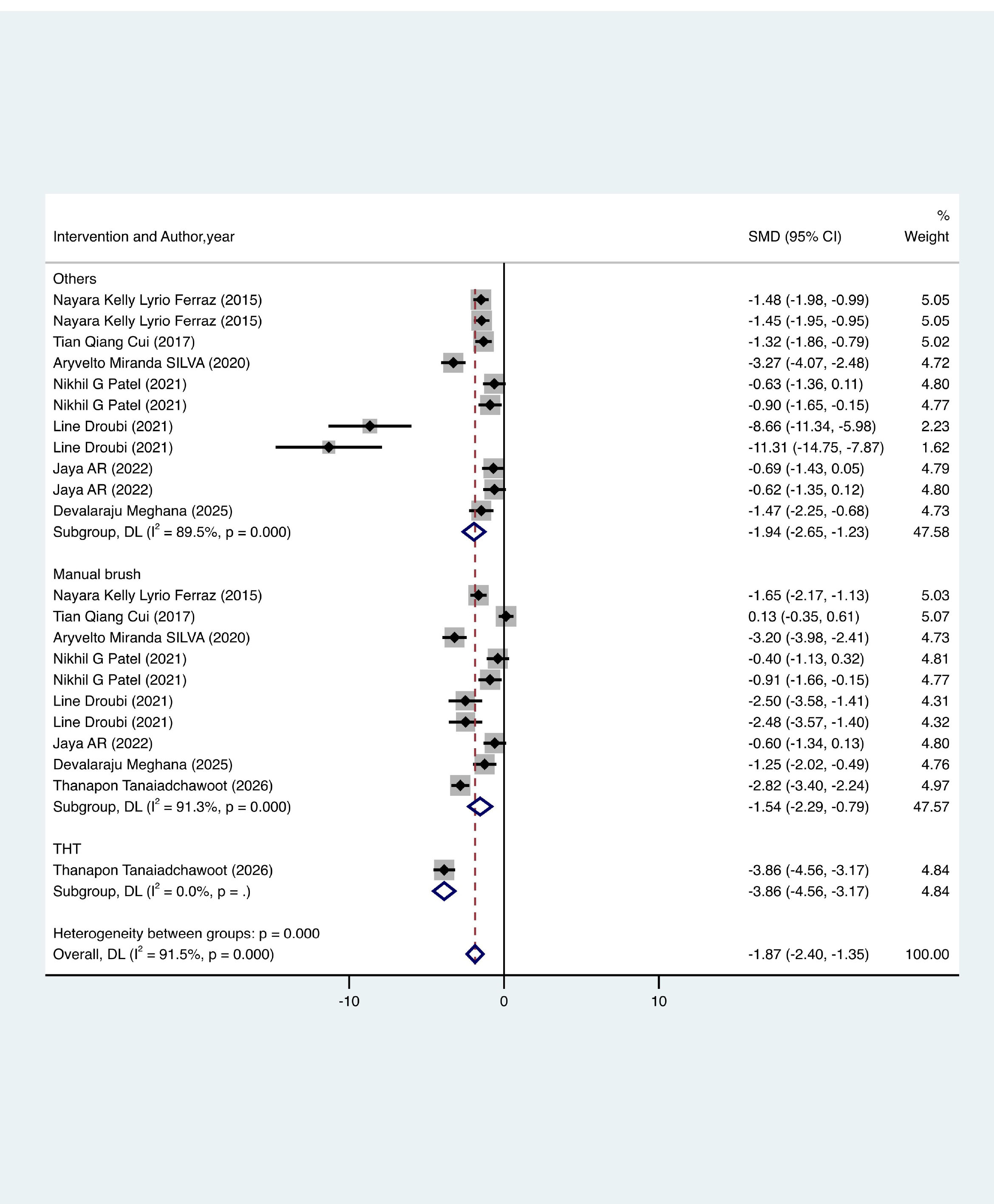
Subgroup analysis by intervention type.
3.6.4. Subgroup Analysis by Participant Characteristics
Further subgrouping by patient demographics illuminated condition-specific responses to the interventions. Participants with Down syndrome experienced the most dramatic reduction in plaque accumulation (SMD = -4.03; 95% CI: -5.58 to -2.49; I2 = 87.0%). Children with Cerebral Palsy also demonstrated a strong and highly consistent response to interventions, showing a significant reduction with minimal heterogeneity (SMD = -1.52; 95% CI: -1.82 to -1.23; I2 = 0%). Statistically significant improvements were likewise documented in hearing-impaired individuals (SMD = -0.90; 95% CI: -1.44 to -0.37; I2 = 0%) and visually impaired participants (SMD = -0.74; 95% CI: -1.13 to -0.36; I2 = 65.3%). Interventions in children broadly classified as having special healthcare needs also showed a large effect (SMD = -3.32; 95% CI: -4.34 to -2.30). The differences between these participant subgroups were highly significant (p < 0.001), indicating that specific neurodevelopmental or physical impairments profoundly influence the extent to which oral hygiene can be mechanically improved (Fig. 5).
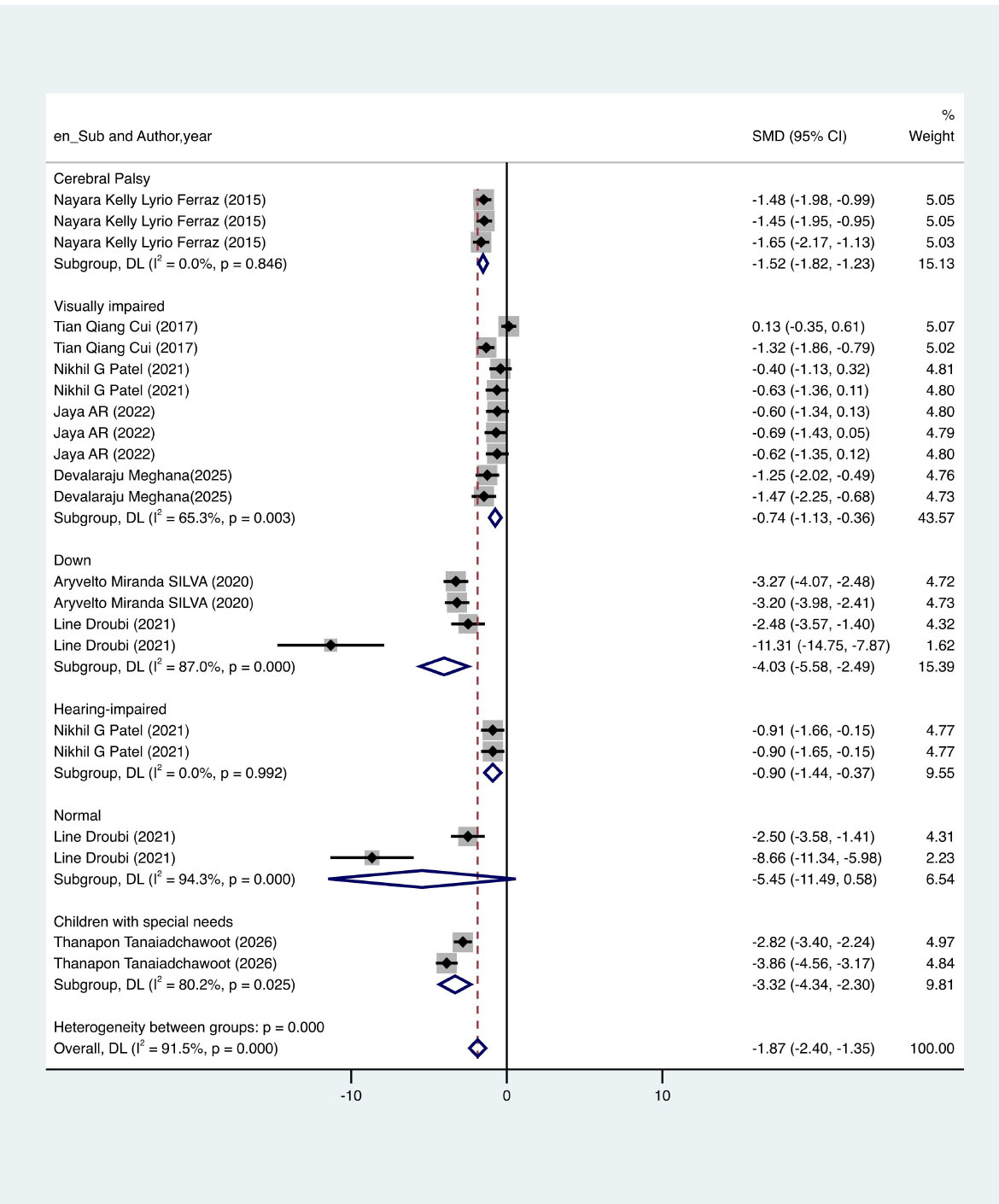
Subgroup analysis by participant characteristics.
3.6.5. Sensitivity Analysis
As shown in Fig. (6), Leave-one-out analysis identified Droubi ’s study about customized toothbrush [34] as an influential study. After excluding this study, the pooled effect size changed from -1.87 to -1.552, indicating that the overall results were sensitive to its inclusion [34]. Excluding studies at higher risk of bias did not materially alter the direction of the effect but slightly reduced the magnitude.
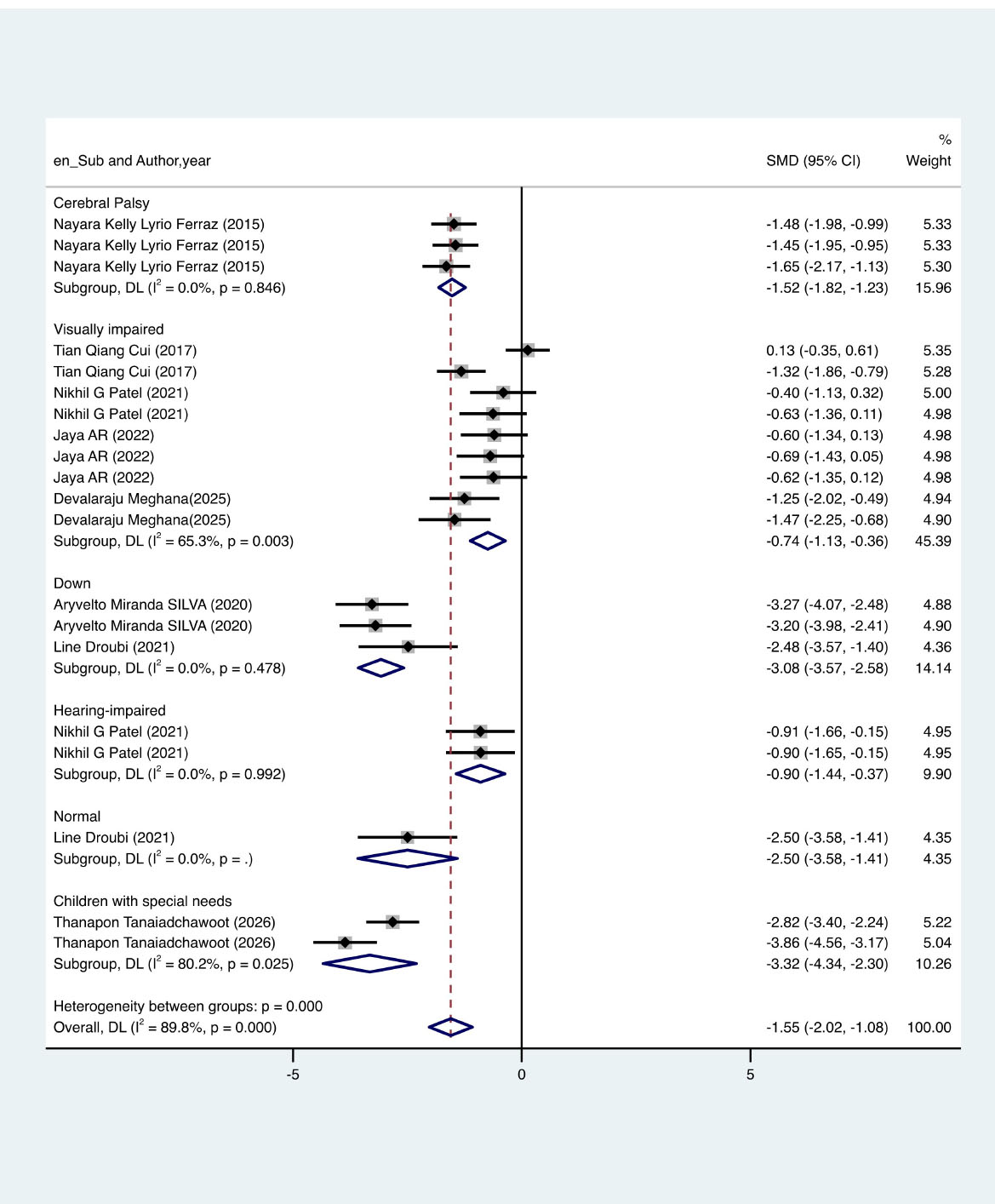
Sensitivity analysis.
3.6.6. Certainty of Evidence
Summary of findings based on the GRADE approach provided in Table 4. In the present review, the outcome of plaque removal (TQHPI) when various oral hygiene aids are used is low.
| Certainty Assessment | Effect | Certainty/ Importance | |||||
|---|---|---|---|---|---|---|---|
| No. of Studies and Design | Risk of Bias | Inconsistency | Indirectness | Imprecision | Other Considerations | Absolute Effect (95% CI) | |
| 8 Randomized controlled trials |
Serious | Serious | Not serious | Not serious | None | SMD: -1.87 lower (-2.40 to -1.35) |
 Low/ Important |
4. DISCUSSION
The systematic review aimed to evaluate the effectiveness of oral hygiene aids for CSHCN. The review included 15 studies encompassing a range of disabilities such as Cerebral Palsy (CP), Autism Spectrum Disorder (ASD), visual and hearing impairment, etc. The studies were conducted across multiple regions, predominantly in Asia (India, China, Thailand) [16, 18, 30, 32, 33, 35, 36, 38-40] with additional studies from the Middle East (Syria, Saudi Arabia) [34, 37], North America (USA) [14], and South America (Brazil) [31, 32]. A notable concentration of studies originated from developing countries in Asia and Southeast Asia (e.g., India, China, Thailand), compared with other regions. This geographic concentration likely reflects the substantial research interest in CSHCN within Low- and Middle-Income Countries (LMICs) in South and East Asia, which may stem from major service gaps in the region, where children with disabilities are often cared for at home with limited professional support [8, 42, 43].
With regard to methodological quality, the 15 included studies demonstrated acceptable methodological quality across three appraisal tools, thereby supporting reliable evidence synthesis. The RCTs scored well on the RoB 2 tool, indicating ratings ranging from low risk of bias to some concerns (1 high-risk study), suggesting a moderate overall risk of bias. The MINORS tool rated the non-randomized study as moderate quality, while the NOS rated the cross-sectional study as satisfactory; however, both designs remain susceptible to confounding, selection bias, and limitations in causal inference. Overall, although the studies are methodologically acceptable, cautious interpretation is warranted given practical challenges including limited blinding, small samples, and complexities of conducting research in children with special healthcare needs.
In terms of overall effectiveness, this systematic review demonstrates that the use of adaptive oral hygiene tools —including powered toothbrushes, modified manual handles, and triple-headed toothbrushes— are associated with a substantial reduction in dental plaque compared with conventional manual toothbrushes (overall SMD = −1.87). Importantly, however, this effect is not consistent across all populations and appears to depend on the alignment between device design and the child’s specific functional limitations.
More specifically, the benefit of powered toothbrushes appears to be more pronounced in children with sensory impairments. This may be explained by the fact that many of these children retain sufficient cognitive function and basic motor ability to position the toothbrush adequately, while experiencing difficulties with the sensory and spatial guidance required for effective manual plaque removal, particularly in the presence of visual impairment [8, 16, 33]. In such populations, where the primary barrier lies in sensory orientation rather than cognition or severe hand-function limitations, powered toothbrushes may offer a practical advantage [44]. However, in children with motor and/or cognitive disabilities, such as Cerebral Palsy and Down syndrome, powered toothbrushes do not appear to confer a consistent clinical advantage over manual toothbrushes [44]. Evidence from individuals with physical or intellectual disabilities indicates that, in most comparisons, no statistically significant difference could be demonstrated between powered and manual toothbrushes, likely because the main barriers in these populations relate not only to plaque-removal mechanics but also to impaired manual dexterity, sequential task performance, and variable caregiver involvement [44]. By contrast, studies in children with Down syndrome suggest that structurally adapted designs, such as customized handles or special-needs toothbrushes, may provide greater benefit by improving grip, positioning, and usability [16]. In this context, the effect of powered action alone may be insufficient unless the device is also compatible with the child’s functional abilities and sensory tolerance [12, 45]. This interpretation aligns with AAPD guidance, which has long recommended both modified toothbrushes and powered toothbrushes for patients with special health care needs, but the present findings suggest that such recommendations should be individualized more explicitly according to the type of disability [2, 46]. This pattern is compatible with the systematic review by Kalf-Scholte et al. [44], which did not find a consistent advantage of powered brushing across people with physical or intellectual disabilities. These studies differ in age, disability, assistance, intervention duration, and outcome definitions, so apparent between-population differences should not be attributed to diagnosis alone.
Beyond plaque reduction, the clinical value of adaptive oral hygiene aids likely encompasses broader factors, including ease of use, patient acceptance, and feasibility within daily home care routines. This preventive perspective is biologically plausible, as mature biofilms are more difficult to disrupt once established; therefore, early and effective mechanical plaque control remains a clinically important strategy for reducing oral disease burden in vulnerable children [47]. Mahabala et al. and the parent-training trial by Fenning et al. [14] highlighted that parents and caregivers of children with autism spectrum disorder face multiple sensory, behavioral, physical, and functional barriers when performing routine oral hygiene, underscoring the importance of tools that are both usable and acceptable in everyday care [13]. In children with motor limitations, structurally adapted devices such as enlarged or customized toothbrush handles may improve usability by aligning with the user’s functional abilities [15]. From a preventive perspective, this is clinically significant, as children with special health care needs often require extensive dental treatment under general anesthesia once oral disease has progressed. Moreover, usability and assistance are central to interpreting device efficacy. Rai et al. [18], Droubi et al. [34], and Krishnan et al. [32] assessed structural handle adaptations that may improve access to brushing for children with motor or dexterity limitations. A trained caregiver or nurse may need to adjust grip, guide brushing, accommodate oral sensory needs, and monitor tolerability; however, caregiver burden and practical adherence were not measured consistently enough here to estimate a pooled effect [9, 10, 15]. Therefore, early adoption of acceptable and functionally appropriate oral hygiene aids may help reduce downstream treatment burden, even though direct cost-effectiveness evidence for these devices in CSHCN remains limited [48, 49].
Regarding heterogeneity, the substantial heterogeneity observed in this review was expected, given the inherent complexity of research in children with special health care needs. CSHCN represent a broad and heterogeneous population encompassing diverse physical, developmental, behavioral, and sensory conditions. Pooling children with cerebral palsy, Down syndrome, autism spectrum disorder, and sensory impairments (hearing and visual impairment) into a single analysis inevitably introduces substantial clinical variability [50]. Additional heterogeneity likely arose from differences in intervention type, as the included devices operate through distinct mechanisms, as well as from methodological differences across studies, including who performed the brushing, participant age, and follow-up duration [51]. In this context, the use of a random-effects model was appropriate because true intervention effects were unlikely to be identical across studies; however, such models do not eliminate heterogeneity and should be interpreted alongside subgroup analyses [51]. In the overall analysis, an I2 value of 91.5% indicated considerable heterogeneity, suggesting that most of the variability across study estimates was attributable to true between-study differences rather than random error.
Despite these challenges, a key strength of this systematic review is the consistent use of the Turesky Modification of the Quigley-Hein Plaque Index (TQHPI) across the included studies, enabling a standardized quantitative synthesis of plaque reduction. Additionally, subgroup analyses based on disability type, intervention modality, and follow-up duration were conducted to explore the sources of variation. This approach provided a more detailed understanding of the performance of oral hygiene devices across subgroups of children with special healthcare needs. The sensitivity analysis indicates that the trial by Droubi et al., which utilized customized toothbrush handles, substantially influenced the pooled findings [34]. Specifically, omitting this study shifted the overall effect size from −1.87 to −1.552. Customized toothbrushes represent specialized clinical interventions rather than basic dental aids for typically developing children [52]. This distinct personalization may contribute to the variation in our findings, suggesting that tailored approaches have a unique influence on clinical results.
Nevertheless, several limitations should be considered when interpreting these findings. The meta-analysis demonstrated considerable heterogeneity (I2 = 91.5%), reflecting substantial clinical and methodological variation among the included studies. Although a random-effects model was used to account for between-study variability, the pooled estimate should still be interpreted with caution. Because the included toothbrushes differed visibly in design and mechanism, blinding of participants and caregivers was generally not feasible, thereby increasing the risk of performance bias. Third, most studies were limited to short- or medium-term follow-up periods, typically ranging from 15 days to two months, which restricts conclusions regarding the long-term sustainability of the observed effects. Finally, while additional outcomes such as ease of use, patient acceptability, and caregiver burden are highly important for this population, they could not be meta-analyzed due to insufficient and nonstandardized data across the primary studies.
Future research should address the limitations identified in this review by prioritizing well-designed, adequately powered RCTs that employ standardized outcome measures. Studies should incorporate longer follow-up periods to evaluate the sustainability of intervention effects over time and include patient-centered outcomes such as quality of life, acceptability, and caregiver burden to enhance clinical relevance. In addition, there is a need to develop and evaluate function-specific interventions tailored to the diverse disability profiles within the CSHCN population. Economic evaluations should also be undertaken to determine the cost-effectiveness and scalability of these interventions in real-world settings. Finally, greater standardization in study design and reporting is essential to enable more reliable comparisons and facilitate higher-quality meta-analyses in the future.
CONCLUSION
This systematic review and meta-analysis indicates that targeted oral hygiene interventions may improve plaque control among children with special healthcare needs, with a reduction in plaque scores measured by the modified Quigley–Hein Index. However, substantial between-study heterogeneity, small and clinically diverse subgroups, and low certainty of evidence limit the strength of device-specific recommendations. Powered brushes, triple-headed designs, and individualized handles should be considered in relation to each child’s motor, sensory, and behavioral needs and the support available from caregivers. Larger comparative trials with standardized outcomes and longer follow-up are needed to establish sustained benefit, feasibility, and cost-effectiveness.
AUTHOR’S CONTRIBUTIONS
The authors confirm their contributions to the paper as follows: D.L.D, M.H.L, H.L.P.N: Study conception and design; D.L.D, M.H.L, K.H.N.T, N.T.D, B.H.K.P: Data collection; D.L.D, M.H.L: Analysis and interpretation of results; D.L.D, M.H.L, K.H.N.T, N.T.D, B.H.K.P, H.L.P.N.: Draft manuscript. All authors reviewed the results and approved the final version of the manuscript.
LIST OF ABBREVIATIONS
| CP | = Cerebral Palsy |
| ASD | = Autism Spectrum Disorder |
| RCTs | = Randomized Controlled Trials |
| THT | = Triple-Headed Toothbrushe |
AVAILABILITY OF DATA AND MATERIALS
The datasets used and/or analyzed during the current study are available from the corresponding author upon reasonable request.
FUNDING
The authors received no financial support for the research, authorship, and/or publication of this article.
CONFLICT OF INTEREST
The authors declared no potential conflicts of interest with respect to the research, authorship, and/or publication of this article.
ACKNOWLEDGEMENTS
Declared none.