All published articles of this journal are available on ScienceDirect.

Global Research Trends in Dental Erosive Wear: A Quantitative Perspective of the Last 3 Decades
 Hafiz Muhammad Zeeshan2
Haifa Ali Almutairi3
Amna Yusuf Siddiqui4
Awsaf Murdhi Suwayyid Alruwaili3
Mohammed Khalid Alessa3
Ahmed Hassan5
Furkan Yousaf6
Namdeo Prabhu7
Hafiz Muhammad Zeeshan2
Haifa Ali Almutairi3
Amna Yusuf Siddiqui4
Awsaf Murdhi Suwayyid Alruwaili3
Mohammed Khalid Alessa3
Ahmed Hassan5
Furkan Yousaf6
Namdeo Prabhu7
Authors Info & Affiliations
Abstract
Introduction
Dental erosion wear is one of the most prevalent dental health issues. By improving patient diets, lifestyle choices, and systemic conditions, dental erosion is being addressed as a major cause of progressive tooth loss, primarily of enamel and other dental hard tissues. Even though more studies are being published, there is still a lack of thorough quantitative reviews of research trends in this field. This study used a bibliometric approach with data from the Web of Science database to examine research trends in dental erosion wear.
Materials and Methods
To gather relevant research publications published between January 1991 and August 2023, a search query was created. The most prolific authors, institutions, sources, keywords, research areas, and collaboration networks among authors, sources, countries, and leading funding organisations were analysed based on 1268 records, topical growth and development, impact, and contributions of published research on dental erosion wear over the period.
Results
The annual publication growth rate was found to be 7.78%, indicating a consistent growth in scholarly publications. The University of São Paulo, located in Brazil, and Addy M were considered the most research-producing institution and author, respectively. With a substantial number of the highest citations, the Journal of Dentistry, published by Elsevier in the Netherlands, held the first place. Dentin, enamel, fluoride, and saliva were some of the major research themes. Brazil's Fundacao De Amparo A Pesquisa Do Estado de Sao Paulo was at the top of this list, showing its significant support for scientific research.
Discussion
The results of this bibliometric analysis show that, over the past three decades, there has been a consistent worldwide rise in publications on dental erosive wear, which is indicative of the field's increasing scientific and clinical significance. Strong research effort is evident in Brazil, the United Kingdom, and Switzerland, as evidenced by the preponderance of their contributions. International cooperation in tooth erosion research is growing, according to collaboration networks between authors and institutions. A movement toward clinical management and biomaterial innovation was demonstrated by the thematic analysis, which highlighted important research focuses on enamel, fluoride, saliva, and preventive measures.
Conclusion
In the field of dental erosive wear, research findings provide useful insights for policymakers, stakeholders, and researchers, guiding them towards unexplored research domains that can promote technological advances and promote collaboration between researchers.
1. INTRODUCTION
Tooth wear from non-carious diseases has long been recognized and includes attrition, abrasion, abfraction, and erosion. A detailed patient history is crucial for accurate diagnosis and treatment [1-4]. Dental erosion refers to the painless loss of dental hard tissues caused by acids of non-bacterial origin [4-6]. These acids may originate from intrinsic sources such as gastric reflux, regurgitation, vomiting, and eating disorders like anorexia or bulimia, in which hydrochloric acid (pH ≈ 1) erodes the enamel surface [4, 6-8]. Extrinsic sources, such as acids introduced through the consumption of solid or liquid foods like fruits, fruit juices, and carbonated beverages, can contribute to acid exposure. An additional aspect to acknowledge is the possibility of enigmatic acids originating from idiopathic sources, constituting a third potential source. In these instances, clinical assessment, patient anamnesis, and complementary examinations are insufficient to clarify the underlying cause of the lesions [9–11].
Dental erosion has historically been a condition that received limited focus, both in private and clinical practice, and in scientific investigation, for decades. Over the past decade, there has been a substantial increase in erosion, particularly among children and adolescents. [12–14]. This surge has ignited a renewed interest in the investigation and exploration of this condition across various healthcare sectors, with a particular emphasis on the realm of dentistry. The impact of oral diseases is more pronounced in economically disadvantaged and socially marginalized communities. Additionally, most oral diseases have been linked to other noncommunicable diseases [15]. In 2008, the World Health Organization (WHO) initiated an action plan to reduce risk factors for noncommunicable diseases like dental erosion. In 2003, before this plan, the WHO emphasized oral health promotion and identified risk factors in its World Oral Health Report [16, 17]. Drinking too many carbonated and sugary beverages can hasten the degradation of enamel and result in dentin hypersensitivity, which can cause discomfort and hinder day-to-day functioning [18–22]. Dietary changes, proper oral hygiene, and routine dental exams are all crucial preventive measures. Collaborative research and innovative strategies are essential to address the evolving landscape of dental erosion comprehensively [23–29].
Scholars often conduct literature reviews to understand and organize earlier findings in their field of study. Bibliometrics is a quantitative approach to literature reviewing that involves the statistical measurement of science, scientists, or scientific activity [30–33]. Bibliometrics is a reliable and objective technique that provides structured analysis of a large body of information, allowing researchers to identify trends, themes, influential scholars and institutions, and gain an overall understanding of existing research [34–40].
Accordingly, the research questions that our study aimed to answer about dental erosion research are as follows:
- What is the extent and evolution of research on dental erosion?
- How influential are these studies in advancing knowledge within the field?
- Who are the key authors, institutions, and countries contributing to this area?
- What are the dominant themes, keywords, and research collaborations?
- Which funding bodies most frequently support studies on dental erosion?
2. METHODS AND MATERIALS
2.1. Data Source
The database chosen is Web of Science (WoS), which is a widely used and respected database in the field of bibliometrics. WoS is known for having the oldest and most comprehensive records of citation indexes, which makes it a valuable resource for bibliometric analysis. The WoS database, although not indexing the largest number of journals in all fields, is considered suitable for examining a sufficient amount of high-quality literature, especially in medicine and natural science, and represents all the necessary trends for investigation [41].The use of WoS as a data source in the study adds credibility to the findings and conclusions drawn from the analysis.
2.2. Search Strategy
The methodology used to retrieve and refine the results for the bibliometric review of dental erosion. The search strategy was comprehensive and was designed to retrieve the maximum number of relevant results. The literature search was performed on September 9, 2023, to avoid changes in citation and publication numbers due to data updates in the database. Relevant keywords were prepared after consulting the relevant literature to run a search query in the database by the two medical science researchers involved in the study. The keywords were combined with Boolean search operators to refine the search results. The Topic search option of the three editions of WoS Core Collection databases was used for data retrieval. The Topic search option provides broader coverage by searching the data from the title, abstract, author keywords, and keywords of the publications. The search query was designed and run in the “Advanced” search option, which allows for more precise and targeted searches.
(((((TS=(dental erosion)) OR TS=(tooth)) AND TS=(erosion)) OR TS=(dental)) AND TS=(erosion)) and Open publisher-invited reviews (Exclude – Peer Review Filter) and Enriched Cited References and Open Access and Proceeding Paper or Meeting Abstract or Letter or Editorial Material or Note or Early Access or Book Review or Correction (Exclude – Document Types) and German or French or Spanish or Chinese or Italian or Portuguese or Croatian or Hungarian or Russian or Ukrainian (Exclude – Languages)
A PRISMA flow diagram is used to show the screening and research selection procedures, which adhered to the Preferred Reporting Items for Systematic Reviews and Meta-Analyses (PRISMA 2020) criteria. The search was restricted to the English language and the last 33 years (1991 to 2023). 3861 articles in all were acquired. Two writers (the third and the fifth) evaluated the retrieved articles to reduce bias. They performed a comprehensive, independent manual review based on the article's title, abstract, and, if necessary, full text.
2.3. Inclusion and Exclusion Criteria
The PRISMA flow diagram for evaluating the bibliography (Fig. 1) provides a detailed analysis of the criteria for publication selection in research. Each item was scrutinized based on the specified criteria: (a) items related to dentistry and erosion, (b) original articles, reviews, series of cases, and guidelines, and (c) articles published between 1991 and 2023. The exclusion criteria were: (a) items unrelated to dentistry and erosion, (b) duplicates, and (c) missing values.
2.4. Tools used
The tools used to process, analyze, and visualize the data obtained from the WoS database for the bibliometric review of dental erosion research are shown in Table 1.
2.5. Risk of Bia
The study assessed the potential for bias to indicate the level of risk: low, moderate, or high, as shown in Table 2.
Overall, the study demonstrates a moderate risk of bias due to reliance on a single data source (WoS), although methodological and analytical tools used are standardized and transparent.
| Tools / Software | Software Description | Analysis of Data |
|---|---|---|
| Biblioshiny | Biblioshiny is a web-based application that provides interactive visualizations of bibliometric data, including citation, co-authorship, and keyword co-occurrence networks. It allows users to explore and analyze the relationships between scientific publications and their authors, institutions, and research topics. | Citation Bursts (Fig. 5), thematic evolution (Fig. 6), Keywords (Authors Keywords, Both Keywords) (Fig. 7) |
| Microsoft Excel | Microsoft Excel is a spreadsheet software that can be used for data manipulation, analysis, and visualization. It provides various functions and tools for statistical analysis, such as regression analysis, correlation analysis, and descriptive statistics. It can also be used for creating charts, graphs, and tables to visualize the data. | Evolution of publications and citations (Fig. 2), Citation structure (Fig. 3), active organizations (Table 3), active authors (Table 4), top funding bodies (Fig. 8), Authorship patterns (Fig. 4), Active journals (Table 5), Research Area (Table 6) |
| Microsoft Word | Microsoft Word is a word processing software that can be used for writing, editing, and formatting documents. It provides various tools for creating tables, figures, and captions, and for inserting citations and references. It can also be used for generating reports, manuscripts, and presentations based on the analyzed data. | Flow diagram (Fig. 1) |
| VOS viewer | A tool for making maps from network, bibliographic, or text data is called VOSviewer. Additionally, the tool aids in examining and visualizing the maps. | Bibliographic coupling countries (Fig. 8), journals (Fig. 8), and authors (Fig. 8) were identified by VOSviewer. |
| Aspect | Description | Potential Risk of Bias |
|---|---|---|
| Methodology Design | Bibliometric analysis using data from the WoS. | Low - The method is standard for bibliometric studies. |
| Selection Bias | Strict inclusion of only peer-reviewed documents. | Medium - May miss relevant studies not peer-reviewed or outside indexed journals. |
| Data Source Bias | Reliance on a single database, which may not capture all relevant journals. | Medium - Excludes potentially relevant literature not covered by Web of Science. |
| Publication Bias | Possible overlooking of negative or non-significant results. | High - Tends to favor publications with significant results. |
| Analysis Tools | Use of Biblioshiny and Microsoft Excel for data visualization and manipulation. | Low - Standard tools for statistical analysis and visualization. |
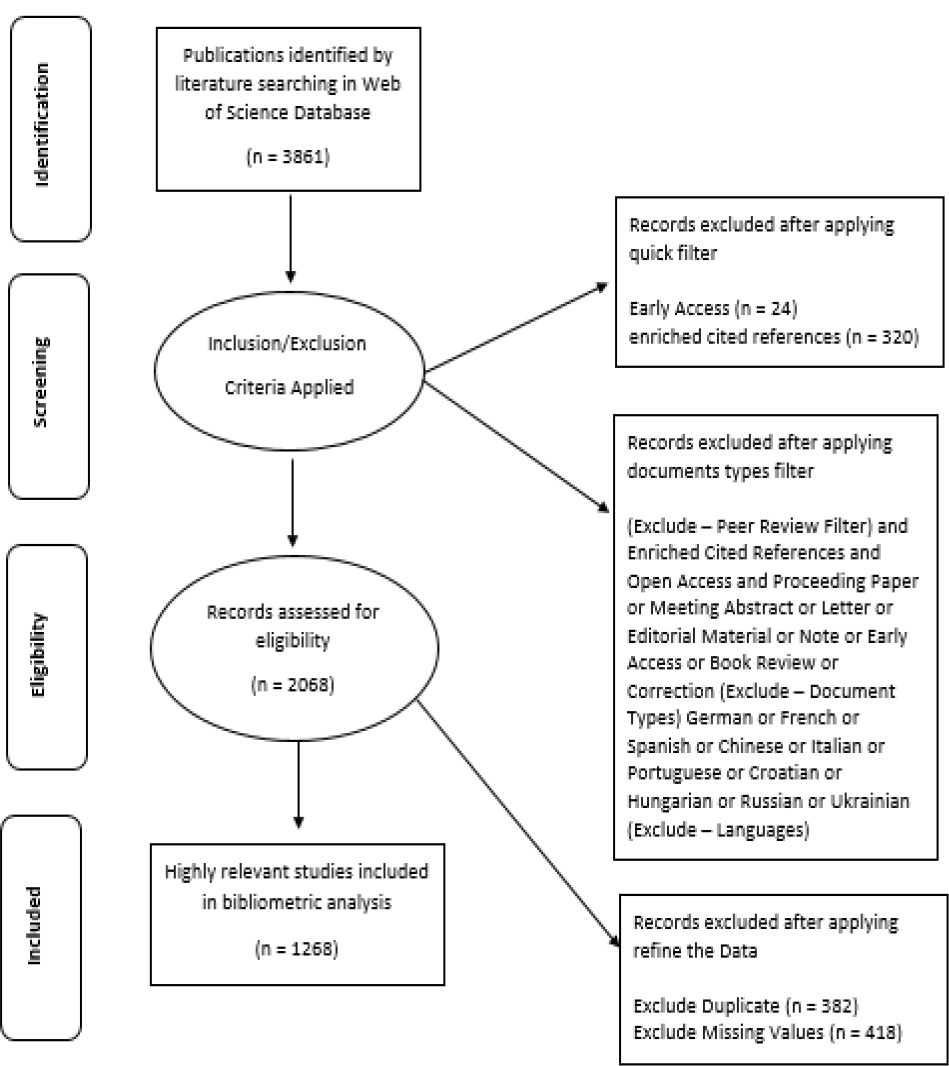
The four-phase data extraction and filtration method used in dental erosion research.
3. RESULTS
3.1. Overview of Results
The 1,268 items in the dataset, spanning 1991 to 2023 and derived from 307 journals, books, and other sources, exhibit a strong annual growth rate of 7.78%. Each document has an average of 28.63 citations, demonstrating the impact of the 10.9-year-old documents. With 26,673 references, 2,587 Keywords Plus (ID), and 2,712 Author's Keywords (DE), the dataset demonstrates a wide range of research topics. 4,003 writers have contributed, including 35 lone authors. With 4.76 co-authors on average per paper and 27.76% of partnerships being foreign, collaboration is common. Reviews (109), which highlight intellectual study, come in second place among documents (1,159) (Table 3).
| Description | Results |
|---|---|
| MAIN INFORMATION ABOUT DATA | |
| Timespan | 1991:2023 |
| Sources (Journals, Books, etc.) | 307 |
| Documents | 1268 |
| Annual growth rate % | 7.78 |
| Document average age | 10.9 |
| Average citations per doc | 28.63 |
| References | 26673 |
| DOCUMENT CONTENTS | |
| Keywords Plus (ID) | 2587 |
| Author's Keywords (DE) | 2712 |
| AUTHORS | |
| Authors | 4003 |
| Authors of single-authored docs | 35 |
| AUTHORS COLLABORATION | |
| Single-authored docs | 38 |
| Co-authors per doc | 4.76 |
| International co-authorships % | 27.76 |
| DOCUMENT TYPES | |
| Article | 1159 |
| Review | 109 |
Note: Chronological growth, volume, and Impact of the research.
Figure 2 indicates that the number of papers published annually increased, peaking at 74 in 2010, with subsequent fluctuations. In 2019, there was a significant spike with 79 articles, followed by a slight decrease in 2020 and 2021. The year 2020 marked a milestone with 85 articles published. However, in 2022 and 2023, there was a noticeable drop in the number of articles, reaching 38 and 22, respectively. The decline in publication numbers after 2020 may reflect the temporary impact of the COVID-19 pandemic on research activity and publication frequency. The publication and citation counts in Fig. (3) show that the individual or organization varied over the years, with a peak in 2010 at 74 publications and 2672 citations. By 2023, the numbers dropped to 22 publications and 9 citations, suggesting a potential decrease in research output or impact despite the initial increase.
3.2. Patterns of Authorship
Seventeen writers have varying research impact and output, as shown in Fig. (4). Four authors lead in citations (8,639) and publications (263). Figures show high citations for authors 2 and 5 (3,925 and 5,656). Authors 15, 16, and 17 have the lowest impact.
Institutions with the highest productivity, authors with extensive output, and preferred journals are shown in Table 4. Comparison of research output and impact among global universities:
- University of Sao Paulo leads in publications with TP of 228 and CI of 12.89
- University of Bristol has the highest CI at 47.26
- Universities of Bern and Indiana also show a strong impact with CIs of 33.8 and 25.42
- Other notable universities include King's College London, University of Oslo, University of Zurich, University of Giessen, Tokyo Medical and Dental University, and Kyung Hee University
| Affiliation | TP | TC | CI | C |
|---|---|---|---|---|
| University of Sao Paulo | 228 | 2940 | 12.89 | Brazil |
| King's College London | 59 | 1390 | 23.55 | UK |
| University of Oslo | 55 | 1002 | 18.21 | Norway |
| Indiana University | 54 | 1373 | 25.42 | USA |
| University of Bern | 51 | 1724 | 33.8 | Switzerland |
| University of Bristol | 49 | 2316 | 47.26 | UK |
| University of Zurich | 46 | 789 | 17.15 | Switzerland |
| University of Giessen | 28 | 1341 | 47.89 | Germany |
| Tokyo Medical and Dental University | 26 | 408 | 15.69 | Japan |
| Kyung Hee University | 24 | 136 | 5.66 | South Korea |
Note: TP - Total Publications, TC - Total Citations, CI - Citation Impact, C - Country.
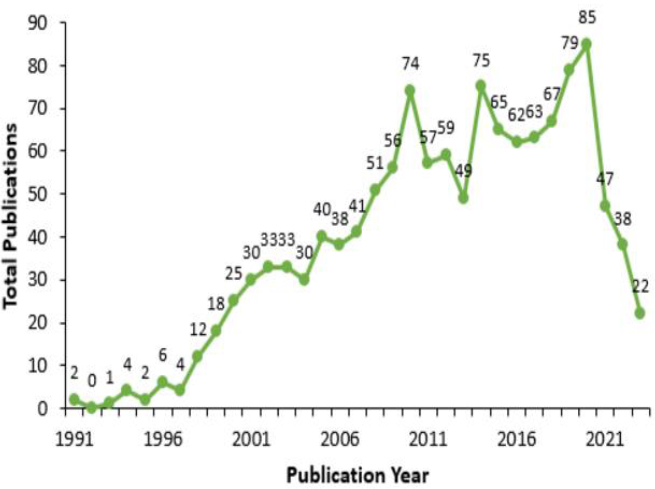
Annual production growth.
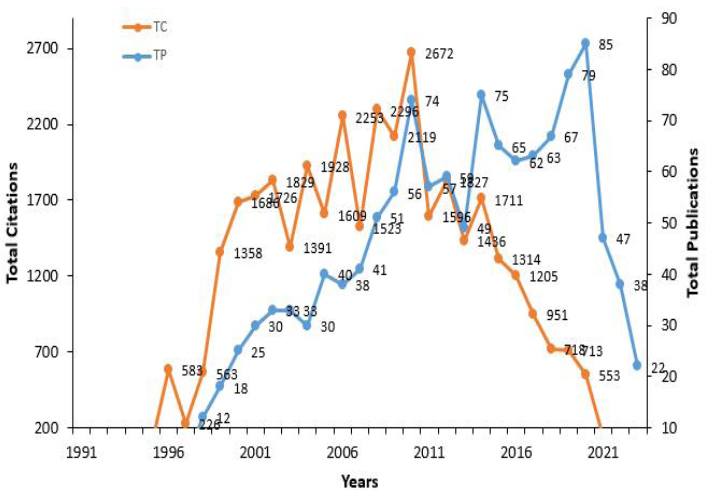
Growth of citations over time.
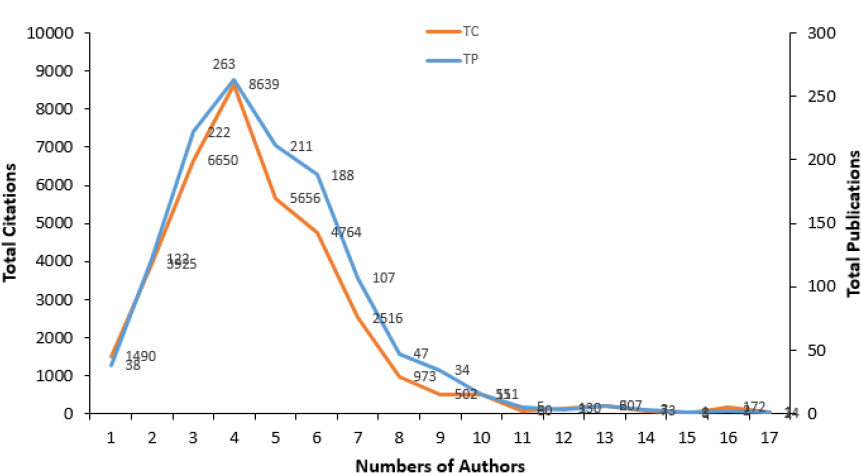
Patterns of authorship.
Table 5 presents a ranking of authors in dental research based on several key metrics. Addy M is ranked first, with 40 publications and 2482 TC over 18 active years, yielding a CI of 62.05. Buzalaf Mar follows closely in second place with 44 publications and 1296 TC across 18 active years, achieving a CI of 29.45. Additionally, authors like Ganss C, Attin T, and Lussi A have made significant contributions with varying CIs, spanning different active years. The data illustrate the diversity and impact of research in dentistry, with authors specializing in various aspects of oral health and dental science.
Table 6 provides a ranking of dental research journals based on several key metrics, shedding light on their influence and significance in the field. At the top of the list, the “Journal of Dentistry,” published by Elsevier in the Netherlands, secures first place with a substantial TC count of 7433 and an IF of 4.83, placing it in the top quartile (Q1) of influential journals. “Caries Research,” published by Karger in Switzerland, follows closely, boasting a high TC and CI, making it another Q1 journal. The rankings continue with journals such as “Archives of Oral Biology,” “Acta Odontologica Scandinavica,” and “Journal of Oral Rehabilitation,” all contributing significantly to the dental research landscape. “Dental Materials” from Elsevier stands out with a remarkable CI of 5.44, demonstrating its substantial influence.
| Rank | Authors | TP | TC | CI | Starting Year | Ending Year | AY |
|---|---|---|---|---|---|---|---|
| 1 | Addy M | 40 | 2482 | 62.05 | 1998 | 2015 | 18 |
| 2 | Buzalaf Mar | 44 | 1296 | 29.45455 | 2006 | 2023 | 18 |
| 3 | Ganss C | 23 | 1553 | 67.52174 | 1999 | 2019 | 21 |
| 4 | Attin T | 41 | 1583 | 38.60976 | 1998 | 2023 | 26 |
| 5 | West Nx | 23 | 1708 | 74.26087 | 1998 | 2015 | 18 |
| 6 | Magalhaes Ac | 32 | 906 | 28.3125 | 2006 | 2022 | 17 |
| 7 | Lussi A | 33 | 1552 | 47.0303 | 1999 | 2023 | 25 |
| 8 | Rios D | 29 | 686 | 23.65517 | 2006 | 2022 | 17 |
| 9 | Hara At | 29 | 819 | 28.24138 | 2006 | 2021 | 16 |
| 10 | Scaramucci T | 27 | 361 | 13.37037 | 2012 | 2023 | 12 |
Note: TP - Total Publications, TC - Total Citations, CI - Citation Impact, StY - Starting Year, EnY -Ending Year, AY - Active Years.
| Rank | Sources | Publisher | CU | TP | TC | CI | Q | IF |
|---|---|---|---|---|---|---|---|---|
| 1 | Journal of Dentistry | Elsevier | Netherlands | 177 | 7433 | 41.99 | Q1 | 4.83 |
| 2 | Caries caries Research | Karger | Switzerland | 128 | 5491 | 42.89 | Q1 | 3.25 |
| 3 | Archives of Oral Biology | Elsevier | United Kingdom | 69 | 1782 | 25.82 | Q2 | 2.79 |
| 4 | Acta Odontologica Scandinavica | Taylor & Francis | United Kingdom | 46 | 1110 | 24.13 | Q2 | 2.38 |
| 5 | Journal of Oral Rehabilitation | Wiley | United Kingdom | 45 | 1819 | 40.42 | Q1 | 3.08 |
| 6 | Dental Materials | Elsevier | United Kingdom | 40 | 1101 | 27.52 | Q1 | 5.44 |
| 7 | Clinical Oral Investigations | Springer | Germany | 39 | 1187 | 30.43 | Q1 | 3.82 |
| 8 | European Oral Sciences | Wiley | Denmark | 37 | 1810 | 48.91 | Q2 | 1.97 |
| 9 | Microscopy and Technique | Wiley | United States | 27 | 358 | 13.25 | Q1 | 3.42 |
| 10 | Journal of Dental Research | Sage | United States | 24 | 1652 | 68.83 | Q1 | 7.72 |
Note: CU - Country, TP - Total Publications, TC - Total Citations, CI - Citation Impact, Q - Quartile, IF - Impact Factor.
3.3. Strongest Citation Bursts among Authors
Figure 5 represents a dataset related to the publication activities of several authors over a span of years, along with corresponding metrics. Several trends and patterns can be observed from this dataset. For instance, some authors, such as Ganss C and Lussi A, have a consistent presence in the research community, with numerous publications and high citation rates over the years. On the other hand, authors such as Scaramucci T and Buzalaf Mar show variations in their publication frequency and citations.
3.4. Thematic Evolution and Keywords
Figure 6 presents data related to various terms and their associations with specific clusters, along with centrality metrics for each term within those clusters. The most frequent term in the dataset is “erosion,” occurring 258 times, forming Cluster 4, and serving as the cluster label. It exhibits the highest betweenness centrality (3561.12), indicating its pivotal role in connecting other terms within the cluster. Additionally, it has a relatively high closeness centrality (0.00218) and page rank centrality (0.0701), further highlighting its significance. “Dental erosion” is another prominent term, appearing 224 times and forming Cluster 3. It has moderate betweenness (2450.00) and closeness centrality (0.00217) values, indicating its role as a connector within its cluster. Other terms such as “enamel,” “tooth wear,” “tooth erosion,” “fluoride,” “saliva,” “dentin,” “dentine,” and “abrasion” are also part of Cluster 4, with varying centrality metrics. While these terms exhibit different degrees of importance within the cluster, they collectively contribute to the cluster's overall cohesion.
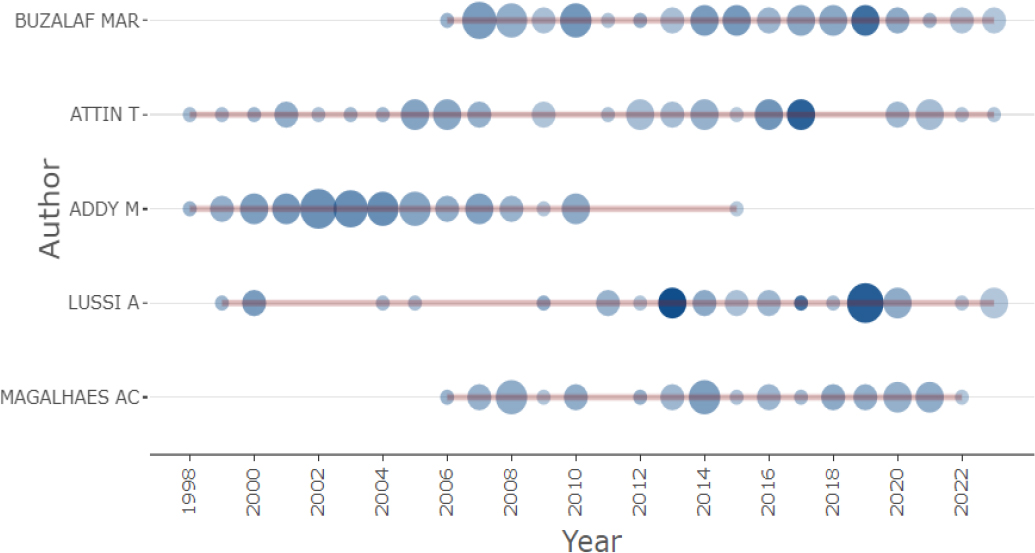
Bursts of citation.
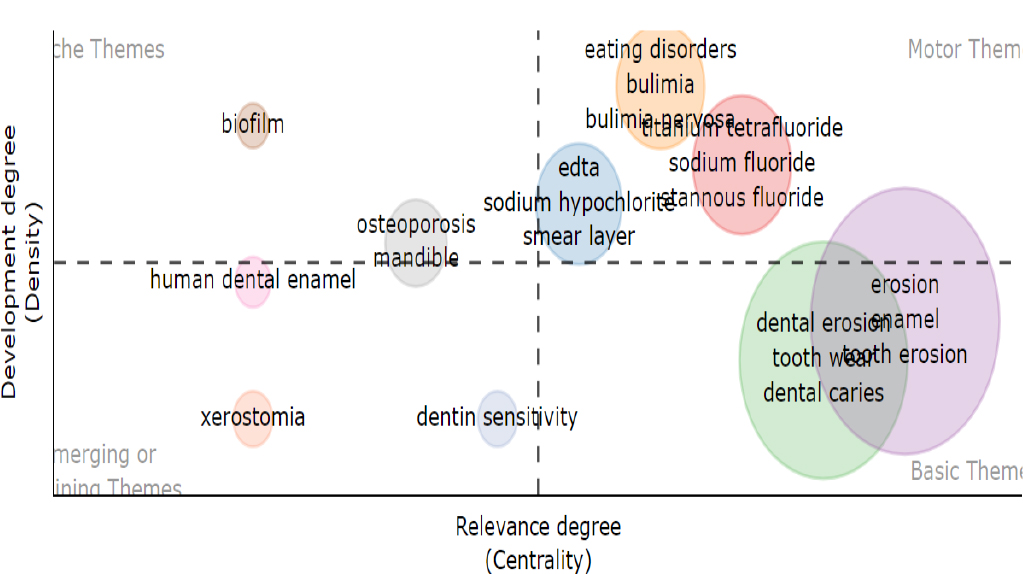
Thematic map.
Figure 7a summarizes the frequency of various terms related to dental erosion and related topics.
Erosion, with 258 occurrences, is the most frequently mentioned term. Dental erosion, a specific type of erosion affecting tooth enamel, is the second most common term with 224 mentions. Enamel, the protective outer layer of teeth, follows closely with 190 references, while tooth wear and tooth erosion are mentioned 126 and 107 times, respectively. Terms such as “prevalence,” “methodologies,” “structural aspects,” “prevention strategies,” and “risk factors” are highlighted in Figure 7b to provide insights into dental erosion management.
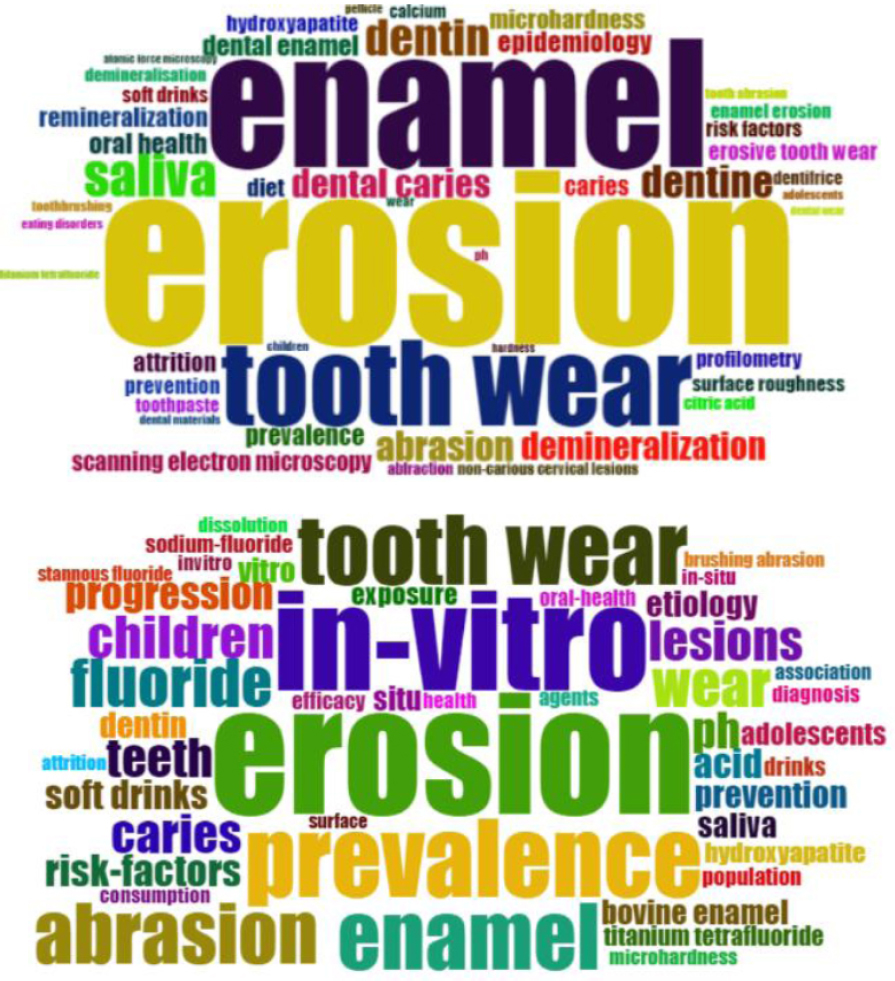
Keywords (a) Author keywords (b) All keywords.
3.5. Research Area
Dentistry is the most common research area, followed by materials science and engineering. Table 7 summarizes the study areas and record counts. In addition to highlighting the importance of different subjects like chemistry, environmental health, and pediatrics, it also offers information regarding the levels of academic activity across disciplines.
| Research Areas | Record Count |
|---|---|
| Dentistry, Oral Surgery, Medicine | 450 |
| Materials Science | 90 |
| Engineering | 30 |
| Pediatrics | 25 |
| Public Environmental Occupational Health | 20 |
| Chemistry | 25 |
| General Internal Medicine | 20 |
| Surgery | 40 |
| Microscopy | 15 |
| Geology | 17 |
3.6. Coupling of Authors, Journals, and Countries in the Bibliography
Bibliographic coupling identifies connections between articles through shared references. It helps trace the evolution of research, assess academic connections, and map research networks. Figure 8 illustrates research outcomes, citations, collaboration, and academic contributions.
Acta Odontologica Scandinavica has a major influence on scholarly papers, as demonstrated in Fig. (9), which lists 46 sources and 1110 citations.
Figure 10 demonstrates how the production and influence of scientific research vary around the world, with varying levels of output, citations, and overall link strength shown for Argentina, Australia, Austria, Belgium, and Brazil.
3.7. Funding Agencies
Figure 11 displays the summary of funding agencies and their corresponding record counts, displaying the distribution of research funding across various institutions. Fundação de Amparo à Pesquisa Do Estado de Sao Paulo tops the list with 122 records, followed closely by the Conselho Nacional de Desenvolvimento Científico e Tecnológico with 80 records and the Coordenação de Aperfeiçoamento de Pessoal de Nível Superior with 67 records.
4. DISCUSSION
The increasing prevalence of dental erosion is universally acknowledged in scientific circles. Both enamel and dentin lesions are found to be quite common in recent studies, with prevalence rates ranging from 30% to 90%, although pulp-affecting lesions are extremely uncommon [42–48]. This analysis was conducted because of the growing interest in this illness in recent years. The study attempts to describe the characteristics of research articles on tooth erosion from 1991 to 2023, including characteristics like author information, language, and year of publication. To investigate document diffusion and bibliographic features, the bibliometric analysis methodology uses statistical techniques and mathematical formulas. It helps with author profile evaluation, identifying countries with significant scientific production, and categorizing article formats and themes. This method improves research organization and management while increasing the amount of information available to scientists [49–52].
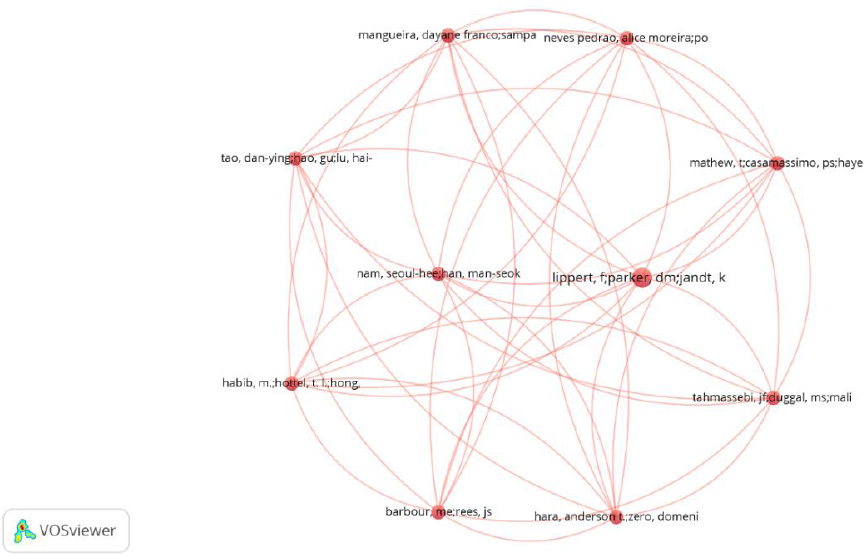
Author bibliographic coupling.
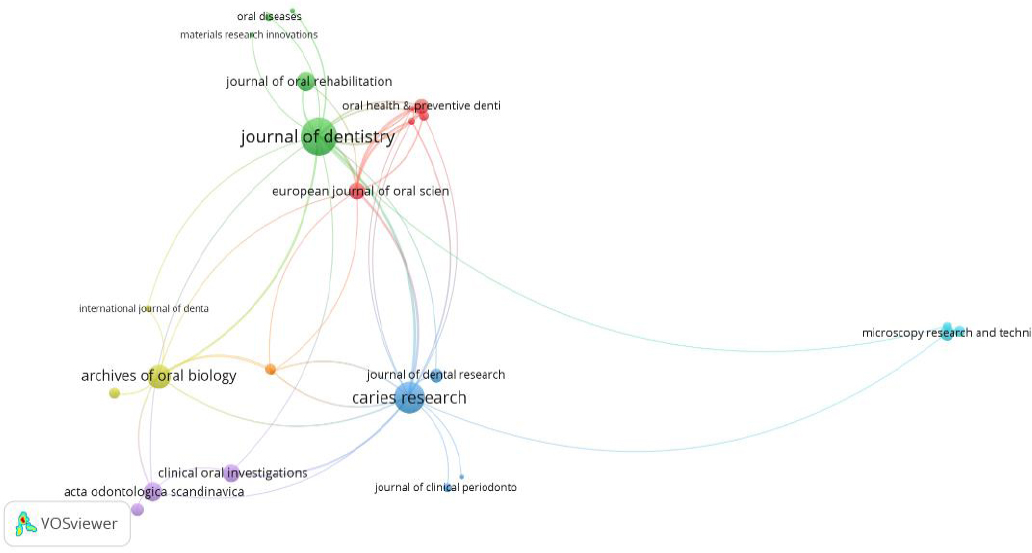
Journals bibliographic coupling.
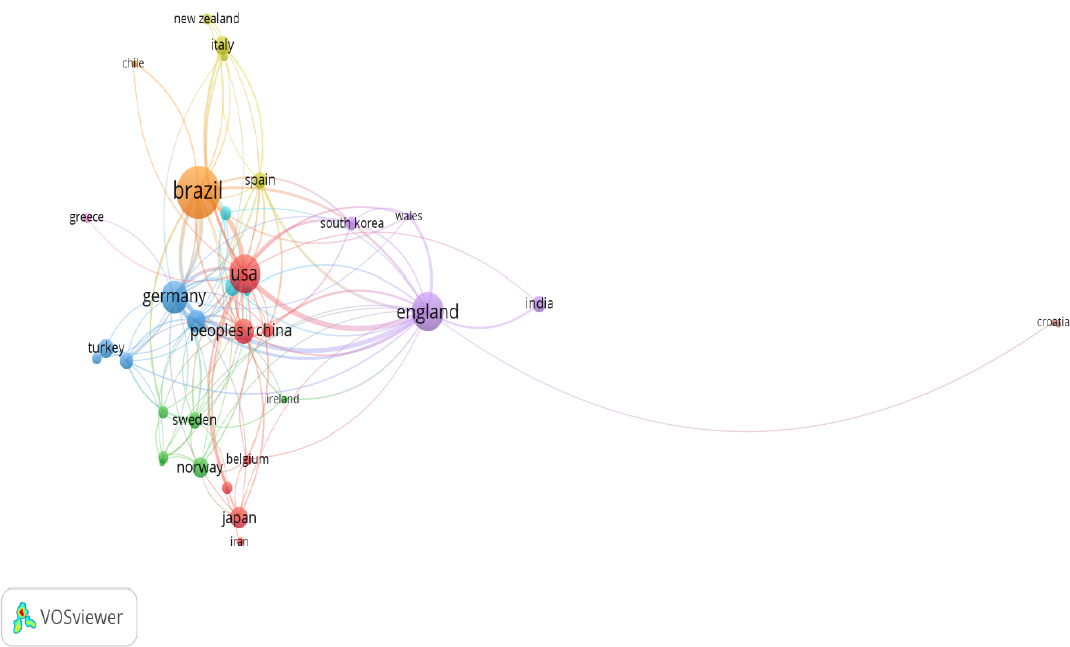
Citation coupling by country.
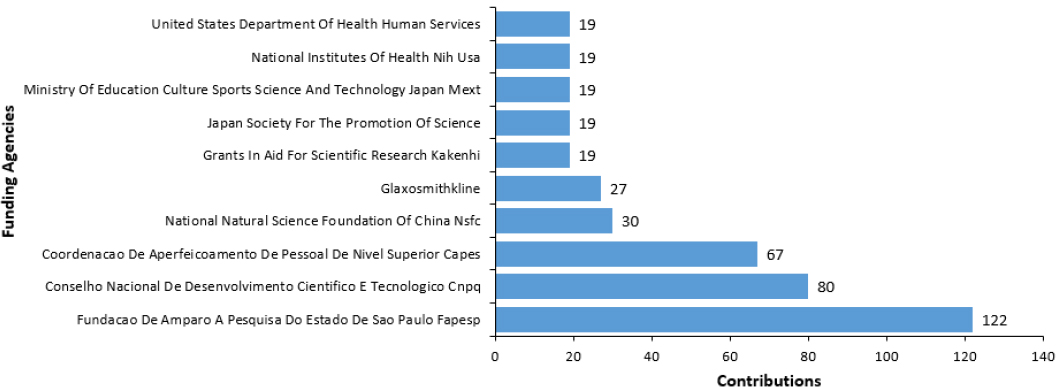
Funding agencies.
4.1. Metrics derived from the Authorship
As the investigation continued, it became clear that authors from different parts of the world were needed to examine the global trend of tooth erosion and its effects between 1991 and 2023. This pattern was noted in the studies by Hasselkvist A et al. [53] and Poskevicius L et al. [54], which examined collaboration between writers from Finland, Sweden, and the United States and authors from Norway, Kuwait, Sweden, Estonia, Latvia, and Lithuania [55]. In the contemporary globalized era, the use of cutting-edge technologies and initiatives that encourage international stays serves to facilitate the establishment of connections between institutions across the world [56].
The findings of this investigation emphasize the current significance of erosion diagnosis, as evidenced by the increasing number of articles published on the subject from 1991 to 2023, with a clear upward trend. Europe hosted 86 of the top 100 most-cited papers, with 8,546 citations. The USA contributed 6 papers (638 citations), Brazil 7 papers (680 citations), and Australia 1 paper (86 citations). Asia and Africa had no representation. England led with 32 papers and 3,106 citations, followed by Germany (18 papers; 1,659 citations) and Switzerland (10 papers; 1,250 citations). In total, 42 institutions were involved, with the Universities of Bern (Switzerland), Bristol (England), and Birmingham (England) contributing the most, with 10, 9, and 7 papers, respectively [57-60].
Haag DG et al. [61] narrate that over the past two decades, it became evident that gender imbalances existed in dental research publications, encompassing both general manuscripts and those with the highest citations. These disparities were consistent across dental disciplines, nations, authorship roles, and chronological trends [61, 62]. In some countries, female authors have dominance over male authors. The transition in this pattern may be a direct result of the rising enrollment of women in dentistry programs, which has gone from a fifth of all students in the 1980s to over 50% today [63, 64].
4.2. Metrics Derived from the Article's Title
Within the pool of analyzed articles (n = 1268), 97.2% were penned in English. It is estimated that 98% of contemporary scientific findings are published in English, irrespective of the research's origin. The primary factors behind this trend are the wider reach and acceptance of English-language articles within the scientific community, which afford authors the opportunity to become international authorities [65]. English became the language of choice for the author, as most research is conducted in the European region [58].
The University of Sao Paulo, based in Brazil, leads with 228 TP and a CI of 12.89. King's College London in the UK follows with 59 publications and a higher CI of 23.55. The dental research journals featured are from different countries. The sample predominantly featured topics on prevention, diet, and hard tissues. The study identified a growing importance of hard tissues over time. Analyzing article themes, it is evident why diet is a heavily researched topic, as the rise in acidic food and beverage consumption correlates strongly with dental erosion. This increase in focus over the past decade likely stems from the need to understand the pathogenic model of dental erosion and its mechanisms, enabling better interpretation in research and everyday clinical practice and forming the basis for preventive and therapeutic approaches. Further research that accounts for additional variables should also be conducted. Supplementing with fluoride [66], casein phosphopeptide-amorphous calcium phosphate [67], and biomimetic hydroxyapatite [68] has really been shown to have positive effects on dental hard tissue. Research on dental materials has been impacted by recent developments in digital manufacturing and 3D printing technologies, which have enhanced mechanical qualities and clinical performance [69–71].
5. LIMITATIONS
This bibliometric study has several limitations. First, all the data in the research came from the WoS Core Collection, which, while thorough and of excellent quality, might not have included all pertinent studies indexed in other databases such as PubMed, Scopus, or Google Scholar. Second, elements like publication age, journal visibility, and self-citations alter bibliometric measures like citation counts, which may have an impact on the relative importance of particular authors or organisations. Lastly, the accuracy of author affiliations and database indexing—which can occasionally lead to classification or attribution inconsistencies—is critical to understanding bibliometric networks and trends. Notwithstanding these drawbacks, the study offers a trustworthy summary of dental erosive wear research trends worldwide over the previous thirty years and lays the groundwork for further studies utilising multi-database data sources.
CONCLUSION
The field of dental erosion wear has received important insights through the use of bibliometric research tools. The purpose of the methodical search query was to obtain widely read published research articles from WoS. Understanding risk factors and management measures related to tooth erosion was achieved through the study's research approach. Several clinical and diagnostic symptoms used to assess dental erosion wear were highlighted by the study. Examining publishing and research subject patterns and finding ignored areas within the field of dental erosion wear, it helped uncover gaps in the available literature. The incidence of dental erosion has been steadily increasing, with a particularly notable rise between 2000 and 2010. Additionally, 2019 saw a remarkable increase in occurrences. According to the data presented, erosion rates have significantly increased over the previous ten years, with children and adolescents being disproportionately impacted.
Strong collaboration between countries, authors, and organisations is indicated by the data findings. In order to properly address the evolving issue of tooth erosion, collaborative research and innovative methods are essential.
Additionally, research topics and the number of records related to them provide insight into how scholarly effort is distributed across different fields. Dentistry, oral surgery, and medicine stand out as the main fields of study, according to a bibliometric analysis of the research area on dental erosion.
By offering a comprehensive summary of the clinical manifestations, risk factors, diagnostic procedures, and gaps found in the present literature, the field of dental erosion wear and its use of bibliometric statistical methodologies has generally produced significant contributions.
RECOMMENDATIONS OR FUTURE RESEARCH DIRECTIONS
The study recommends strengthening cooperative research projects that provide a comprehensive picture of the changing dental erosion landscape. Use citations and keywords to analyse dental erosion research trends and keep tabs on new subjects. To investigate the distribution of scholarly work in several domains, including dentistry, oral surgery, and medicine that are connected to dental erosion wear, conduct additional bibliometric analysis, and conduct a comprehensive literature review. The inclusion of research papers on dental erosion may be impacted by potential selection bias in the WoS database. Future research on the possibility of tooth erosion may use other databases, such as PubMed, Google Scholar, and Scopus.
AUTHORS’ CONTRIBUTIONS
The authors confirm their contributions to the paper as follows: R.I., H.M.Z., and H.A.A. contributed to study conception and design; H.M.Z., A.H., and F.Y. carried out data collection; A.Y.S. and A.M.S.A. performed analysis and interpretation of the results; and M.K.A. and N.P. prepared the draft manuscript. All authors reviewed the results and approved the final version of the manuscript.
LIST OF ABBREVIATIONS
| WoS | = Web of Science |
| PRISMA | = Preferred Reporting Items for Systematic Reviews and Meta-Analyses |
| NCDs | = Non-Communicable Diseases |
| WHO | = World Health Organization |
| GERD | = Gastroesophageal Reflux Disease |
| CI | = Citation Impact |
| TP | = Total Publications |
| TC | = Total Citations |
| Q | = Quartile |
| IF | = Impact Factor |
| AY | = Active Years |
| TCpY | = Total Citations per Year |
| DE | = Author’s Keywords |
| ID | = Keywords Plus |
| WoS CC | = Web of Science Core Collection |
| FAPESP | = Fundação de Amparo à Pesquisa do Estado de São Paulo (São Paulo Research Foundation, Brazil) |
| CNPq | = Conselho Nacional de Desenvolvimento Científico e Tecnológico (National Council for Scientific and Technological Development, Brazil) |
| CAPES | = Coordenação de Aperfeiçoamento de Pessoal de Nível Superior (Coordination for the Improvement of Higher Education Personnel, Brazil) |
| NSFC | = National Natural Science Foundation of China |
| NIH | = National Institutes of Health (USA) |
| HHS | = Department of Health and Human Services (USA) |
| MS Excel | = Microsoft Excel |
| VOSviewer | = Visualization of Similarities Viewer |
| Biblioshiny | = Web-based interface for bibliometric analysis in R |
| SDG | = Sustainable Development Goals |
| COVID-19 | = Coronavirus Disease 2019 |
AVAILABILITY OF DATA AND MATERIALS
All the data and supporting information are provided within the article.
ACKNOWLEDGEMENTS
Declared none.